
Last updated September 22, 2026
Level 1 sweep and inspection to the NFPA 211 annual standard - flue, crown, cap, and flashing checked and photographed
Chimney sweep logs do not sweep chimneys. They loosen some creosote - which then falls where a brush and vacuum still have to collect it.
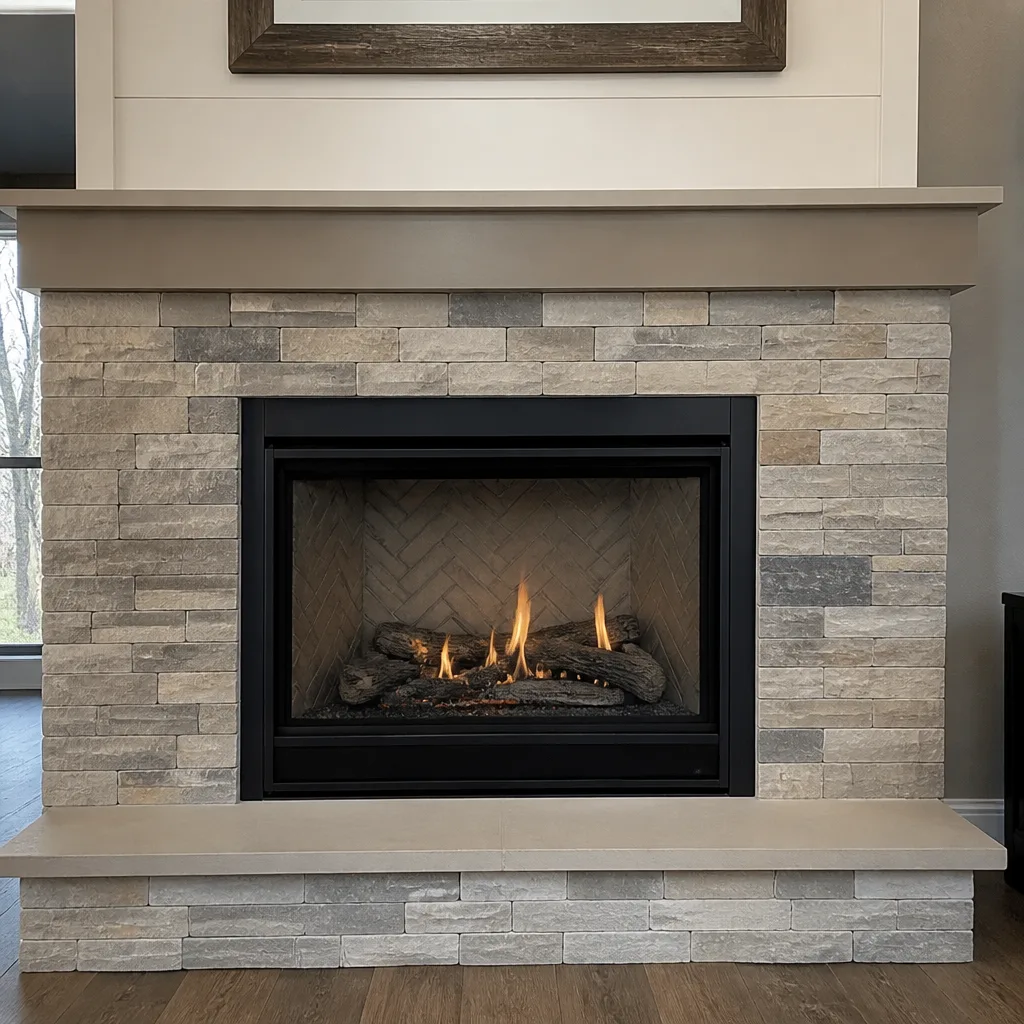
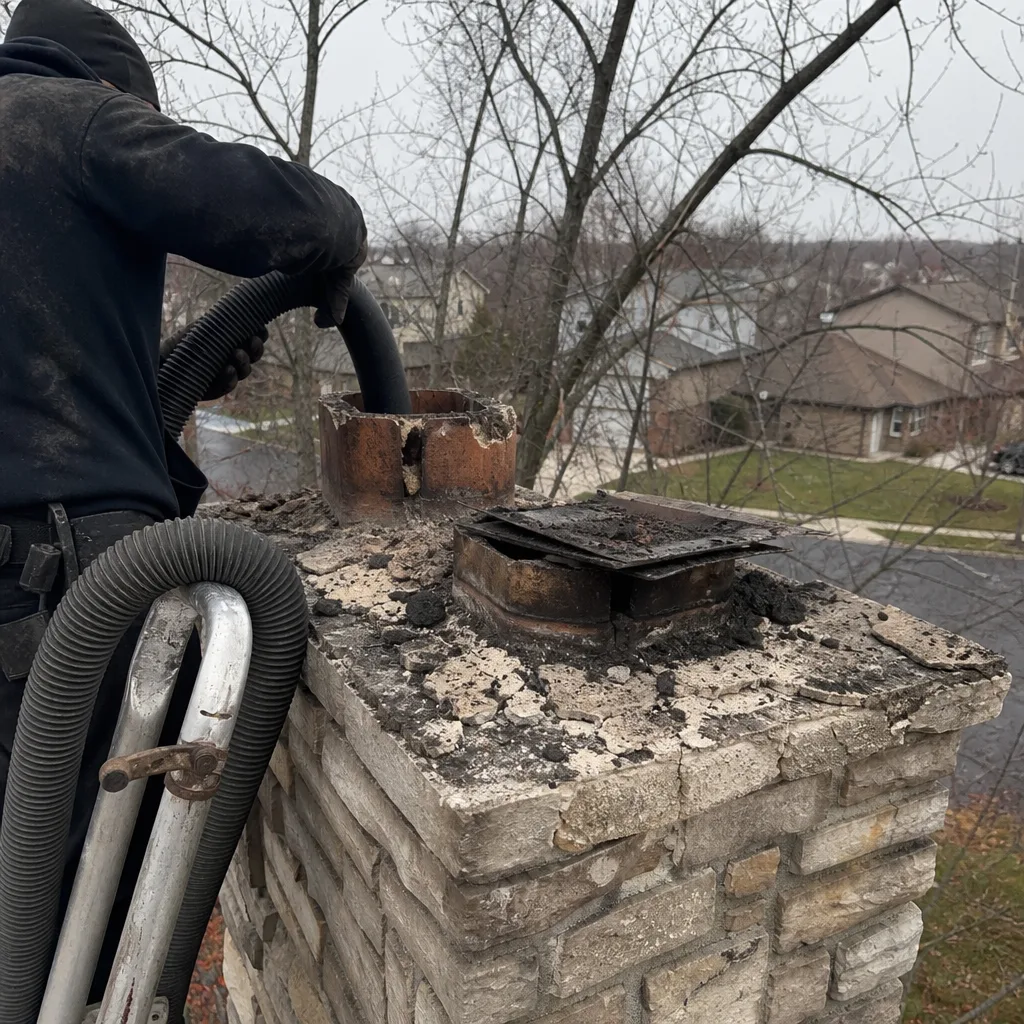 Before
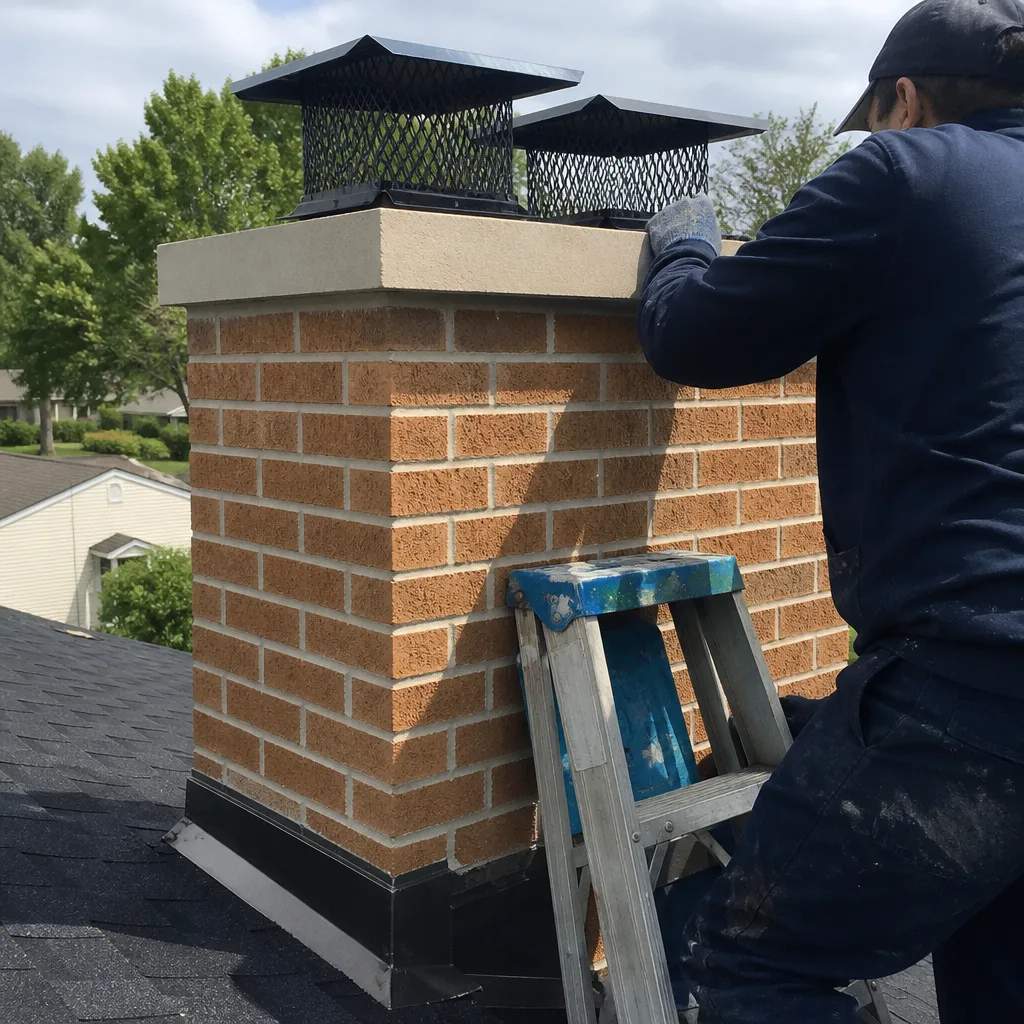 After
After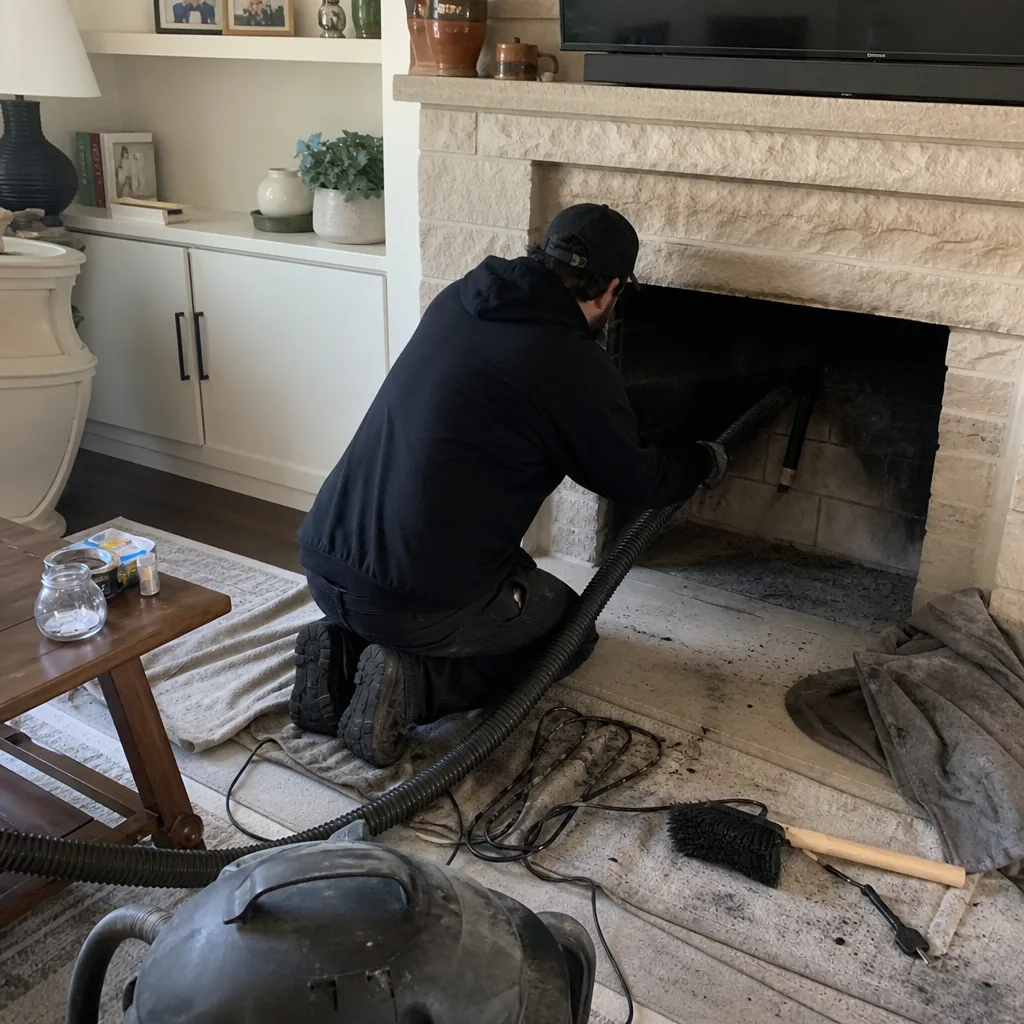 Before
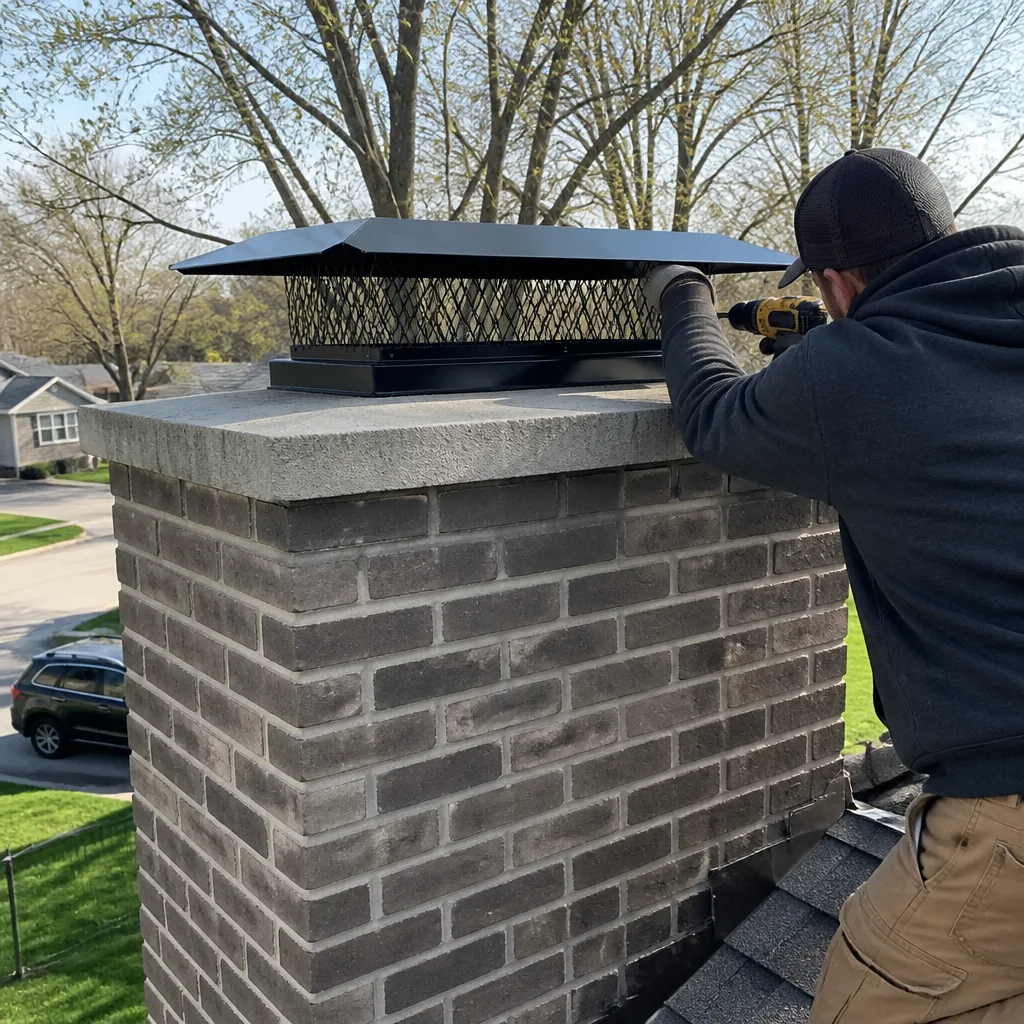 After
After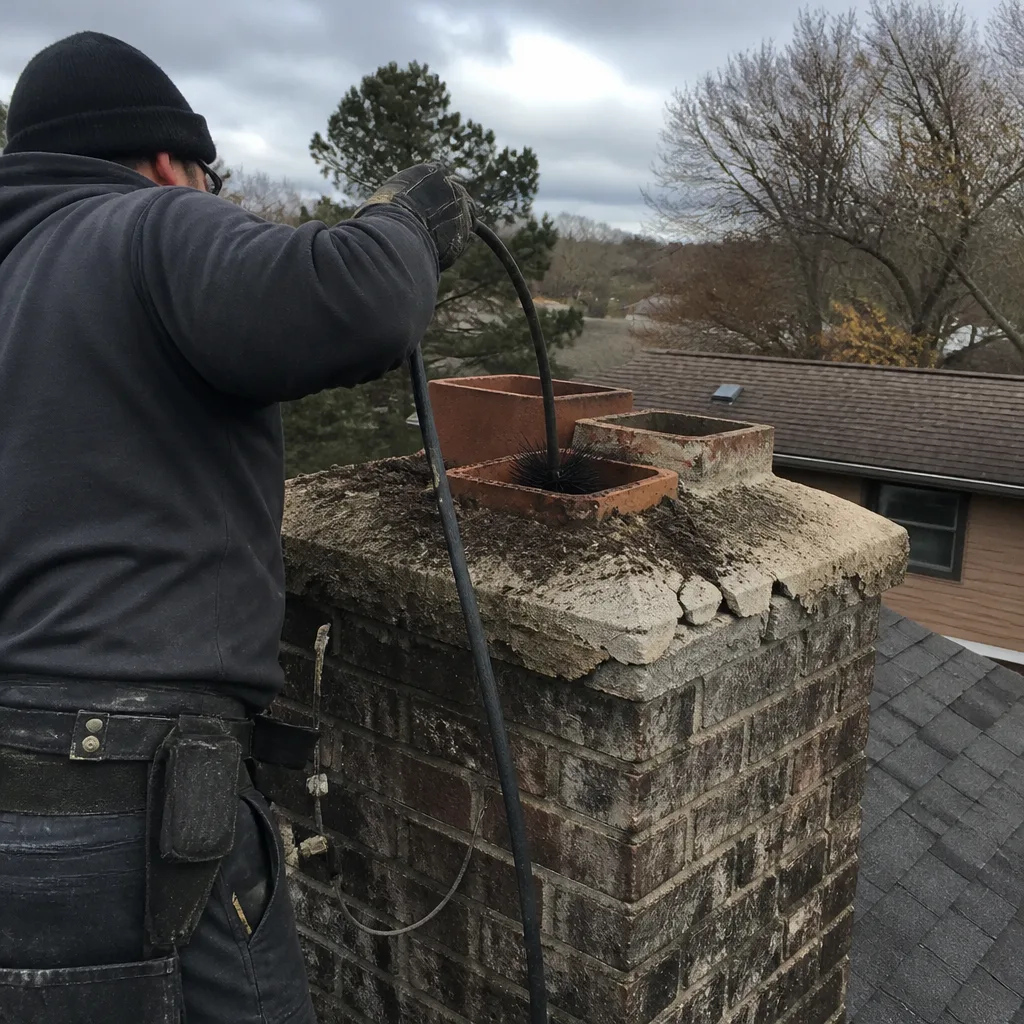 Before
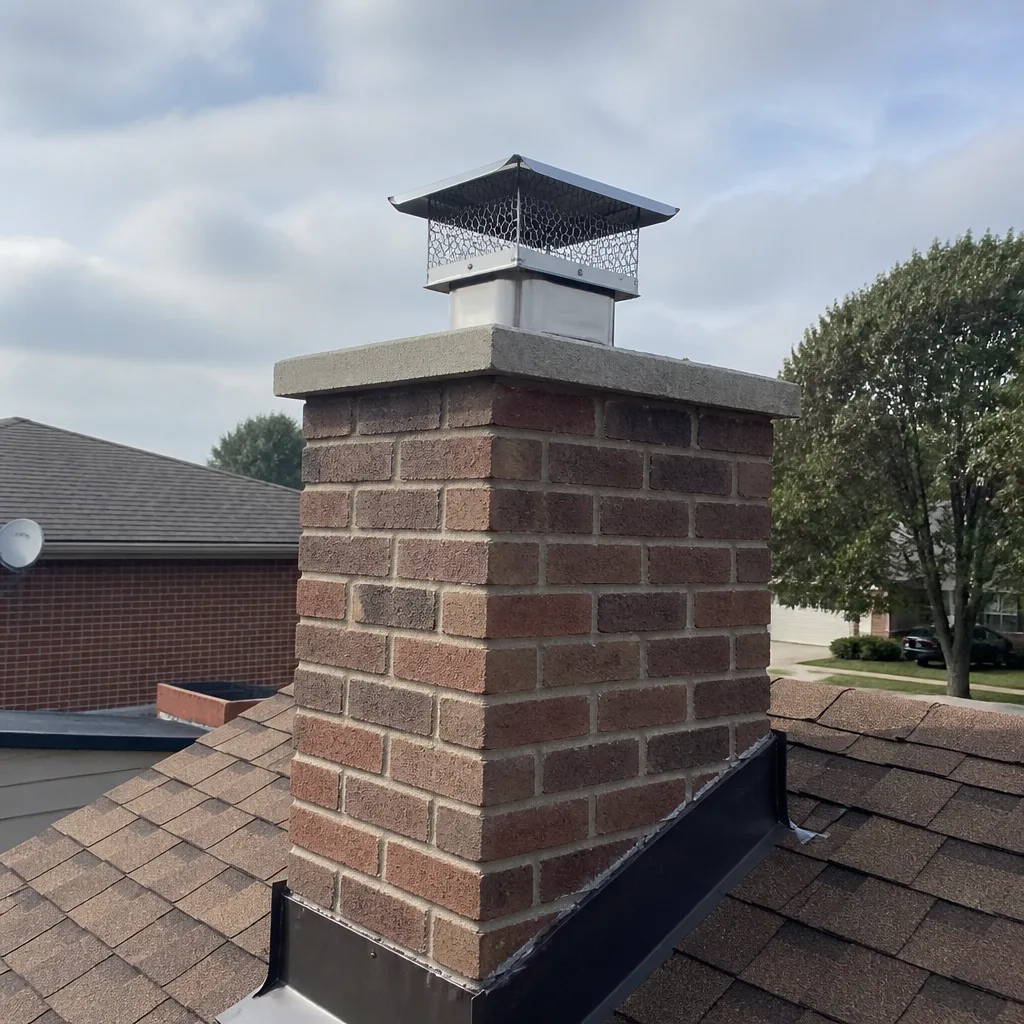 After
AfterSeasonal Chimney Cleaning Care for Orland Park: Year-Round Homeowner’s Guide
Scheduling your chimney cleaning every October is industry-standard advice - it’s also advice built around sales convenience, not around when Orland Park’s freeze-thaw damage actually becomes visible and documentable. In the seventeen years we’ve been inspecting chimneys across Orland Park, Tinley Park, and Palos Heights, we’ve documented over 38,000 flue systems, and the pattern is consistent: the homeowners who catch spalling tile and mortar joint separation early are the ones who looked in April, not the ones who waited for the fall rush. This guide reorganizes the seasonal calendar around Orland Park’s actual damage cycle - the 17 to 22 freeze-thaw cycles per winter that open micro-cracks in mortar and spall clay liners - so you know what to check, when to check it, and what documentation to keep. For a full seasonal checklist tailored to Orland Park homeowners, see our companion resource.
Quick Answer
The most valuable chimney inspection window in Orland Park is mid-April through May, after the final freeze-thaw cycle but before summer heat dries and contracts the liner. A proper year-round schedule includes: spring exterior masonry inspection for spalling and mortar damage, summer cap and crown check after storm season, fall pre-burn damper and firebox verification, and mid-winter draft monitoring if you burn more than one cord of wood or exceed 40 use-hours per month. Off-cycle cleaning should trigger automatically at these burn thresholds, regardless of calendar date.
Table of Contents
- Why April-May Is the Correct Primary Inspection Window in Orland Park
- Spring Exterior Masonry Check: What to Look For
- Summer Cap and Crown Check After Storm Season
- Fall Pre-Burn: Damper, Firebox, and Creosote Assessment
- Mid-Winter Draft Behavior and Burn-Frequency Thresholds
- The Moisture Intrusion Sequence in Orland Park’s Clay-Tile Flue Inventory
- What to Store in Your Seasonal Chimney File
- Common Mistakes to Avoid
- When to Call a Professional
- Frequently Asked Questions
BeforeAfterWhy April-May Is the Correct Primary Inspection Window in Orland Park
Orland Park sits on a clay-heavy glacial till plain where winter temperatures oscillate across the freezing point more often than homeowners realize. Our weather station data, tracked across service calls since 2009, shows 17 to 22 freeze-thaw cycles in a typical winter, with some years hitting 26. Each cycle forces water trapped in mortar joints and clay flue tiles to expand roughly 9 percent by volume. When it refreezes, it doesn’t return to its original position - it leaves a micro-crack. By March, those cracks are at their widest. By mid-April, the last freeze has passed, the cracks are fully open and visible, but the summer heat hasn’t yet dried and contracted the liner, which can hide separation gaps.
This timing matters for three specific reasons in Orland Park’s housing stock:
- Maximum visibility of spalling: Spalling - the flaking or chipping of brick, stone, or clay tile surfaces - is easiest to photograph and measure when the surface is still damp from winter but not water-saturated from spring rains. We schedule our most detailed Chimney Cleaning & Sweep in Orland Park documentation appointments in this window.
- Mortar joint assessment before repointing season: Tuckpointing and repointing contractors in the southwest suburbs book heavily starting in June. Identifying joint failure in April gives you six to eight weeks to schedule competitive quotes and compare written scopes before the summer rush.
- Insurance documentation timing: Most homeowner policies in Cook and Will counties require “maintenance and reasonable care” clauses to be satisfied before storm or fire claims. A dated April inspection report with photo documentation satisfies this requirement for the upcoming burn season and establishes a baseline if summer storm damage occurs.
The fall inspection, by contrast, is a pre-use safety check - valuable, but reactive. It confirms whether the system is safe to light. It rarely catches progressive masonry damage early enough for minor repair, because by October, summer contraction has partially closed visible cracks and the next freeze cycle hasn’t begun to reopen them. The homeowners who avoid $4,000-$8,000 liner replacements are the ones who saw the $400 crown repair needed in April.
Spring Exterior Masonry Check: What to Look For
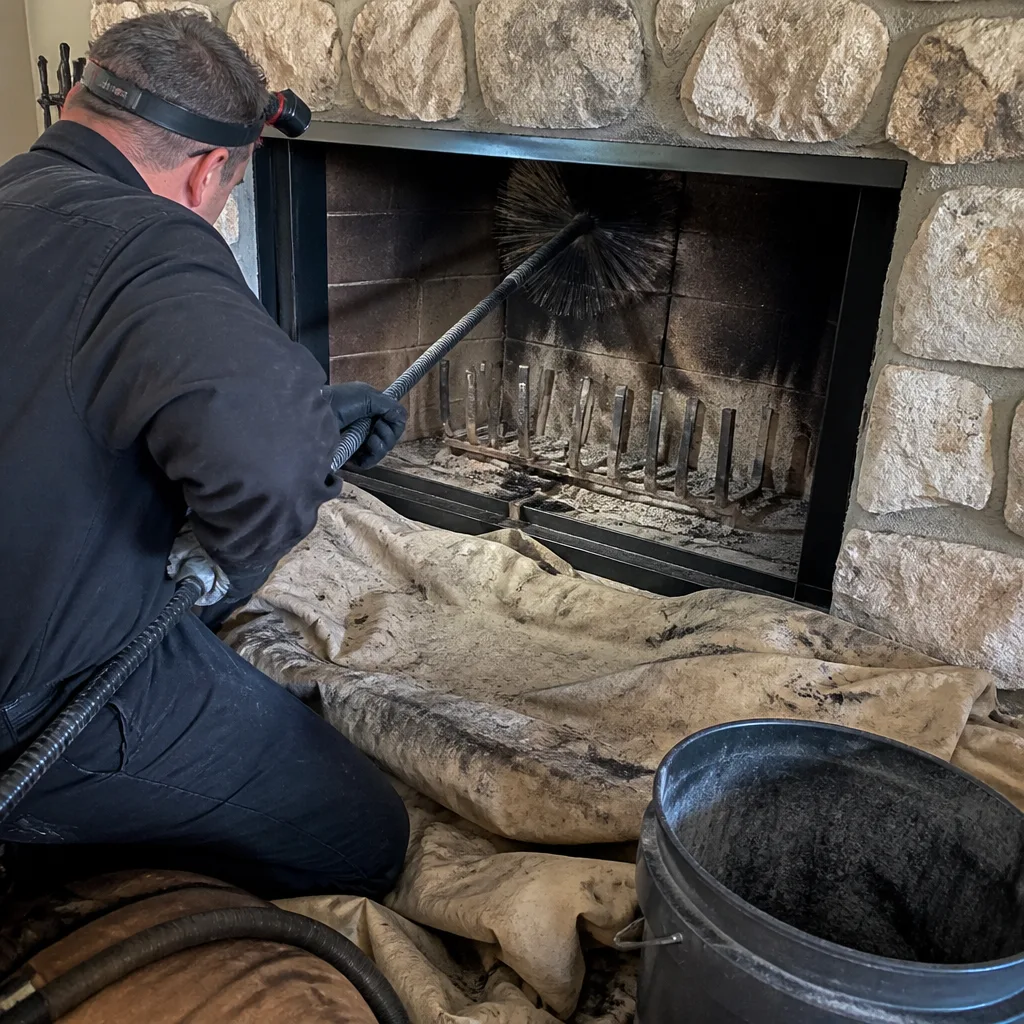
After the final freeze-thaw cycle, typically mid-to-late March in Orland Park, the exterior masonry tells the truth about winter damage. You don’t need a ladder for the initial check. Stand at the curb with binoculars or a telephoto phone lens and work through this sequence:
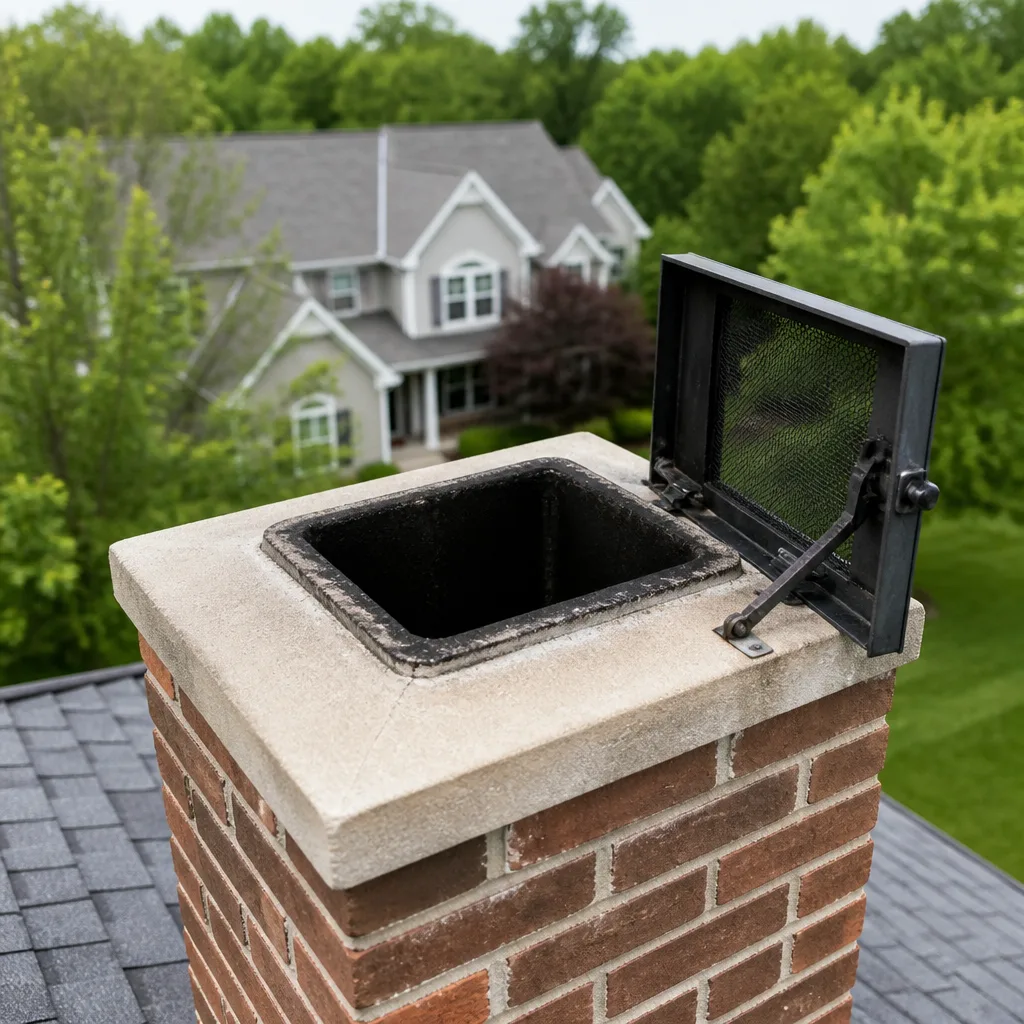
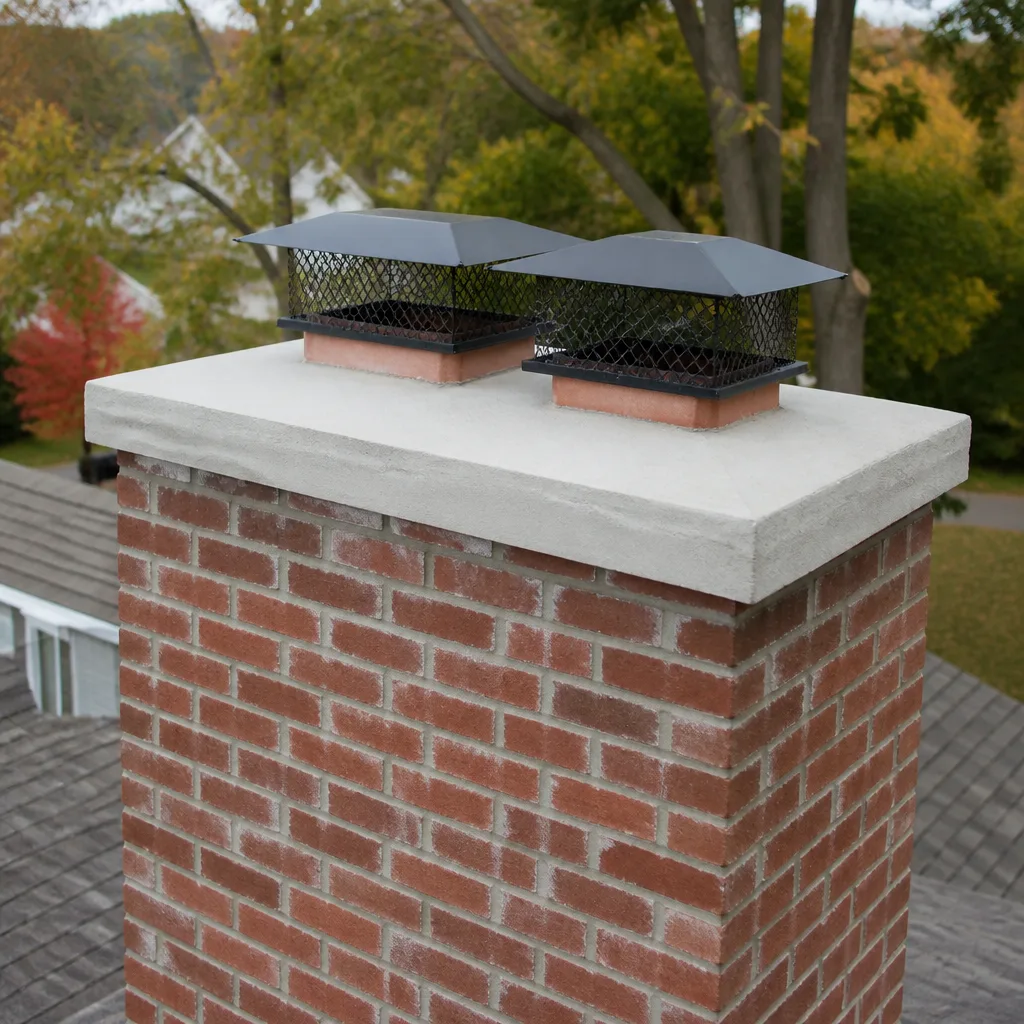
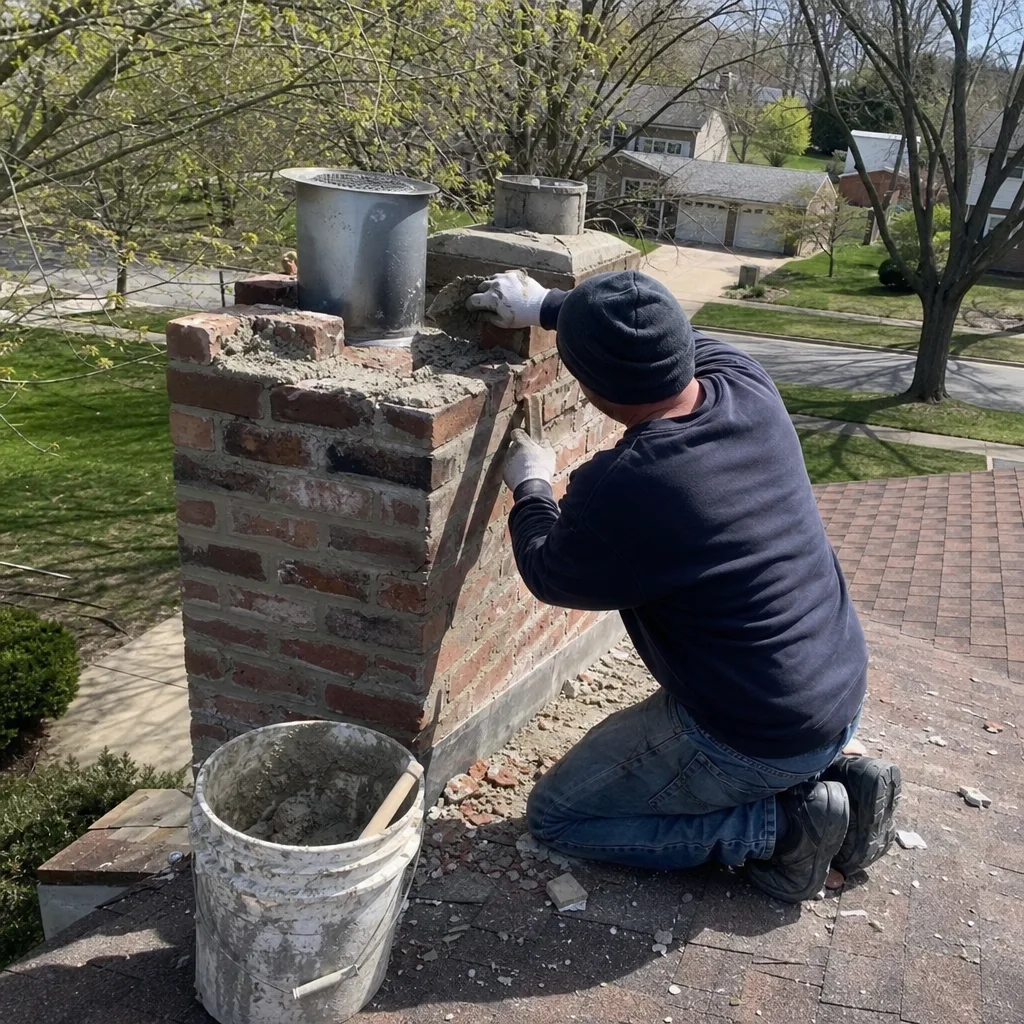
- Crown condition: Look for hairline cracks radiating from the flue tile, pooling discoloration, or missing chunks at the edges. The crown is the concrete slab that seals the top of the chimney; in Orland Park, we see accelerated crown deterioration in homes built between 1985 and 2005, when poured crowns were commonly finished flat rather than sloped for drainage. A flat crown holds meltwater. A sloped crown sheds it.
- Brick faces and mortar joints: Check for spalling - flaking, pop-outs, or cratered brick surfaces - especially on the south and west exposures that receive the most thermal cycling. In neighborhoods like Silver Lake and Centennial Park, where 1970s and 1980s brick construction is common, we see spalling concentrate on the second course above the roofline, where snow accumulation and sun exposure overlap.
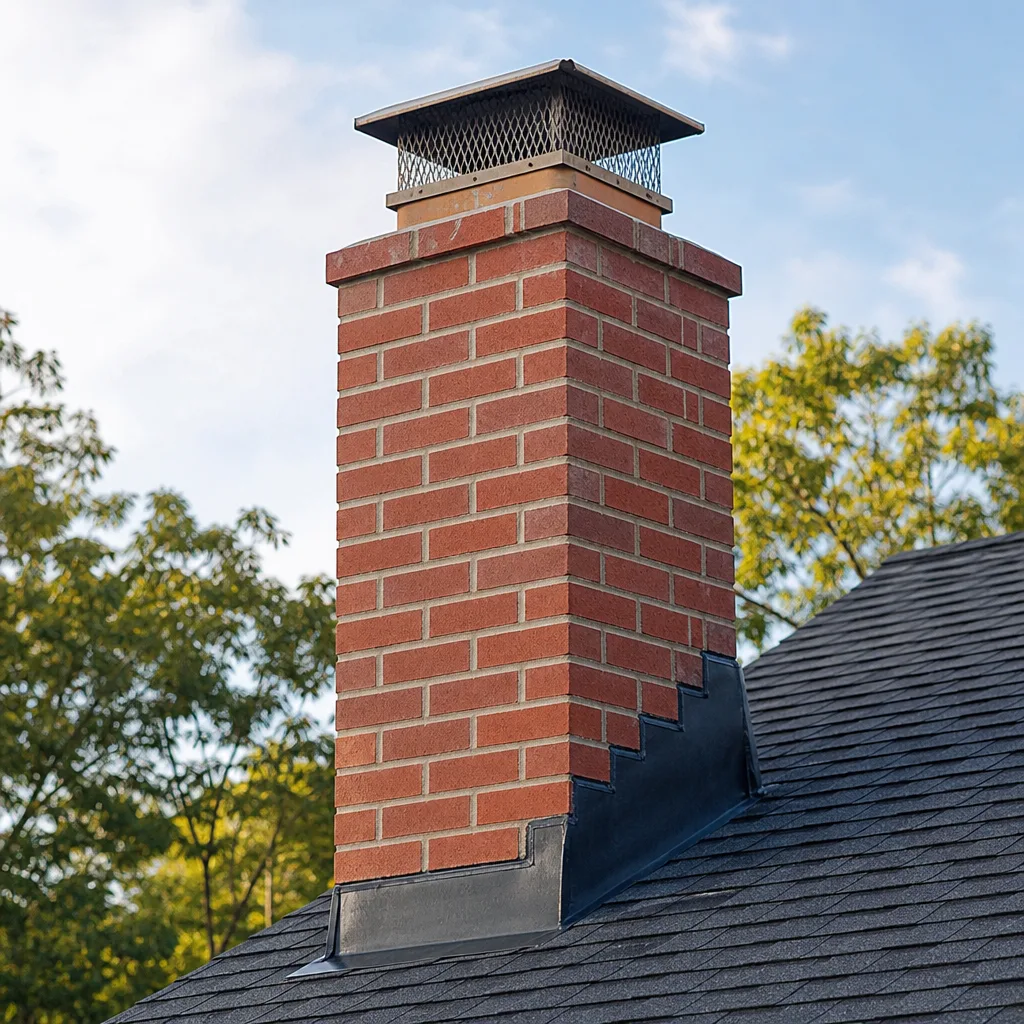
- Flashing and counterflashing: Look for lifted corners, rust streaks, or gaps where the metal meets the brick. Spring in Orland Park brings driving rains from the southwest; compromised flashing is the entry point for the moisture that drives the next winter’s freeze-thaw damage.
- Chimney cap and spark arrestor: Confirm the cap is seated squarely and the mesh is intact. Squirrel and raccoon activity peaks in late March and early April in the Orland Park area, and a damaged cap is an invitation.
Document everything with dated photos. Compare to last year’s. If you see new spalling, fresh cracks, or changed staining patterns, that’s your signal to schedule a Level 2 inspection with camera documentation before the summer contraction hides the evidence.
For homeowners in newer developments like Orland Park Crossing or the southwest subdivisions near 143rd Street, note that manufactured stone veneer chimneys fail differently than traditional masonry - water enters at the veneer-to-flashing junction and travels behind the facing, making exterior visual checks less reliable. These chimneys benefit even more from the April camera inspection window.
Summer Cap and Crown Check After Storm Season
Orland Park’s storm season runs May through August, with peak severe weather in June and July. The National Weather Service records an average of 18 to 24 severe thunderstorm days per year for the southwest Chicago suburbs, many producing hail between 0.75 and 1.25 inches. Hail doesn’t need to damage your roof to damage your chimney cap or crown.
The summer check, ideally performed in late August or early September, has a narrow purpose: confirm that storm season hasn’t introduced new water entry points before you light the first fire. Here’s what to verify:
- Cap displacement or denting: A hail-dented cap may still shed water, but denting near the edges can break the seal against the flue tile, allowing vertical water entry directly into the flue. Gelco and Olympia Chimney caps, which we install through Haven’s buying network, are rated for 1.5-inch hail impact; if your cap is a lighter-gauge aftermarket product, inspect carefully.
- Crown crack propagation: Summer heat causes thermal expansion of the crown concrete. If winter freeze-thaw opened a crack, summer expansion may have widened it further. Look for new vegetation growth in cracks - a reliable indicator that water and organic material are collecting.
- Flashing seal integrity: The expansion and contraction of summer temperature swings, often 30°F or more in a single July day in Orland Park, stress the flexible sealant at flashing joints. Fresh separation here is visible as a dark gap or as rust bleeding below the flashing line.
This is also the correct season to address crown sealing if needed. HeatShield CrownSeal, a flexible refractory compound we apply with trowel and brush, cures best in temperatures between 50°F and 80°F with low humidity - typical Orland Park conditions in late May and September. Applied in this window, it forms a waterproof, thermally stable membrane before the first freeze. Applied in October, it may not achieve full cure before winter stress begins.
If your summer check reveals no new damage, file the dated photo record with your spring documentation. If it reveals changes, you have six to eight weeks before burn season to schedule repair with a written price before work starts - Haven Standard Clause 1.
Fall Pre-Burn: Damper, Firebox, and Creosote Assessment
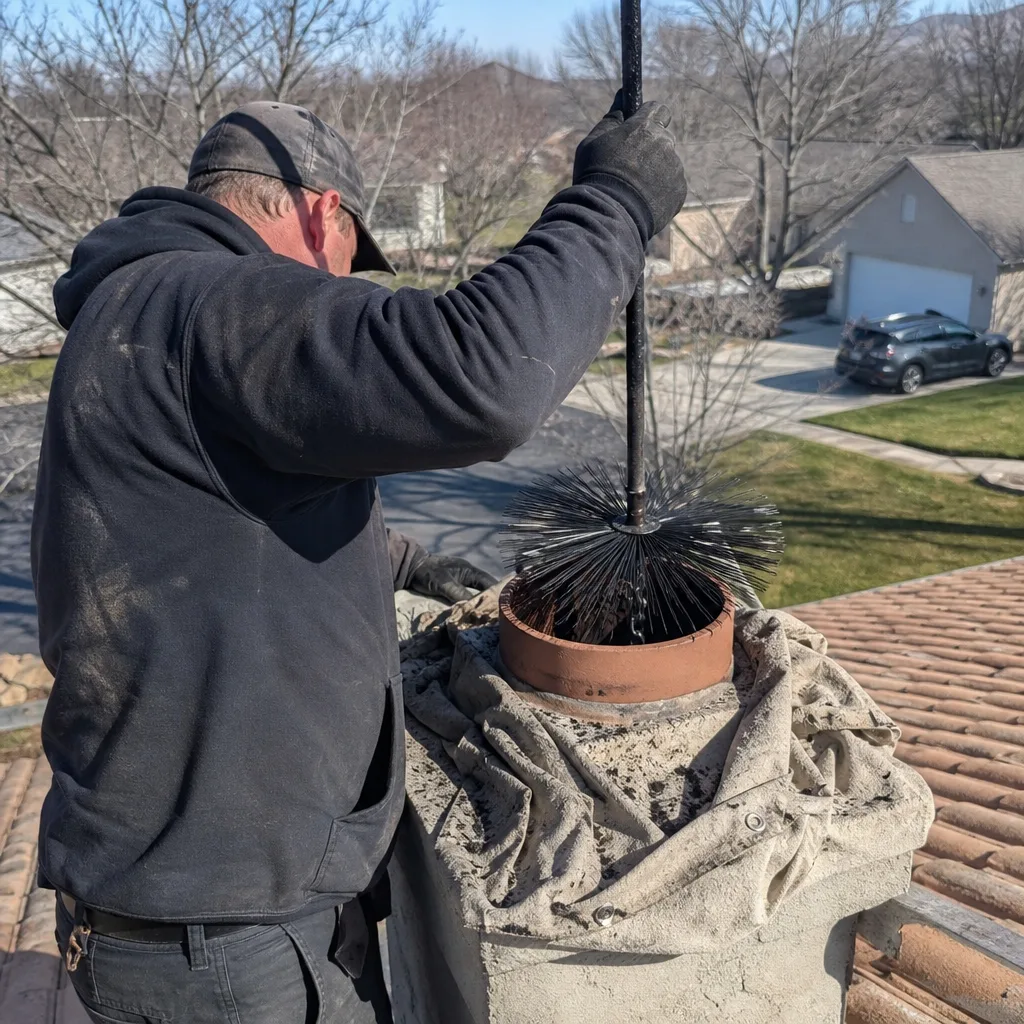
The fall inspection is the one most homeowners know: verify the system is safe to use before the first fire. In Orland Park, where first fires typically light in mid-to-late October, this check should be completed by early October to allow repair scheduling if needed. The focus shifts from masonry longevity to combustion safety.
Damper operation: Open the damper fully and verify it seats cleanly when closed. Look past the damper into the smoke chamber - the angled transition area above the firebox - for sloped mortar buildup or cracked parging. A stuck or incomplete damper seal wastes heat and can allow backdrafting of combustion gases into the living space.
Firebox integrity: Check refractory panel condition in prefabricated fireplaces, or firebrick and mortar condition in masonry fireboxes. Hairline cracks in refractory panels are normal; through-cracks or missing chunks are not. In Orland Park, we see accelerated firebox deterioration in homes with direct-vent gas inserts installed in original wood-burning fireplaces, where the reduced flue temperature prevents proper draft and concentrates moisture in the firebox.
Creosote classification: Not all creosote is equal. NFPA 211 recognizes three classes:
- Class I: Soot and light powder, easily removed with standard brushes. Normal for gas appliances and occasional wood fires.
- Class II: Granular or flaky deposits, requiring mechanical brushing. Common with regular hardwood burning and proper draft.
- Class III: Glazed, tar-like, or hardened deposits, often requiring rotary chains or chemical treatment. Indicates slow-burning fires, green or unseasoned wood, or restricted airflow. Class III creosote is the fuel of chimney fires.
Our Fireplace Services in Orland Park include fall pre-burn inspections with camera documentation of creosote class and location. We don’t guess - we photograph it, classify it, and put the classification in writing with the cleaning scope and price before any work begins.
For Orland Park homeowners burning oak, hickory, or ash from local suppliers, expect Class II buildup at approximately one cord of seasoned hardwood under normal draft conditions. If you’re burning more than that, or if your fires are frequent but short (under two hours), expect faster accumulation due to incomplete combustion.
Mid-Winter Draft Behavior and Burn-Frequency Thresholds
The standard advice - “sweep once per year” - assumes average use. It doesn’t account for the homeowner who burns two cords of oak in a cold Orland Park winter, or who runs a wood stove as primary heat in a 1950s bungalow near La Grange Road. Burn frequency should drive cleaning intervals, not calendar position.
We use two thresholds to flag off-cycle cleaning needs:
- The cord-of-wood threshold: One cord of seasoned hardwood, burned in a properly drafting fireplace, typically produces Class II creosote buildup requiring cleaning at the end of the burn season. Two cords, or one cord of partially seasoned wood, typically requires mid-season inspection. Three cords almost always requires mid-season cleaning. If you’re stacking wood in October and restocking in January, you’re in this category.
- The use-hours threshold: For gas log sets and inserts, track operating hours. Forty hours of continuous flame per month, typical for a gas insert used as supplementary heat in an Orland Park split-level, produces ceramic fiber and combustion deposit buildup that can restrict flue passage. At 60 hours per month, we recommend mid-season inspection regardless of calendar date.
Mid-winter monitoring means watching for draft behavior changes, not just scheduling checks. Signs that creosote buildup or flue damage is affecting performance include:
- Smoke spillage at fire start-up, especially on cold, still days when the stack effect is weakest
- Longer time to establish draft after lighting
- Unusual odors when the fireplace is not in use, indicating trapped moisture or organic material in the flue
- Visible soot or creosote flakes in the firebox after burning, suggesting liner detachment or rough surface catching deposits
If you observe two or more of these symptoms, stop using the fireplace and schedule inspection. The cost of an off-cycle sweep in January is a fraction of the cost of a chimney fire in February. Our 24-hour live phone support means you can call (708) 294-2571 any time to describe symptoms and get guidance on whether immediate inspection is warranted.
Orland Park’s winter wind patterns also matter. Prevailing westerlies, accelerated by the flat terrain southwest of the village, can create downdraft conditions in chimneys shorter than surrounding rooflines. If your home is in a newer subdivision with two-story construction and your chimney serves a first-floor fireplace, you may experience wind-induced draft reversal that mimics creosote blockage. A smoke test and draft gauge reading, included in our Level 2 inspection, distinguishes true blockage from pressure imbalance.
The Moisture Intrusion Sequence in Orland Park’s Clay-Tile Flue Inventory
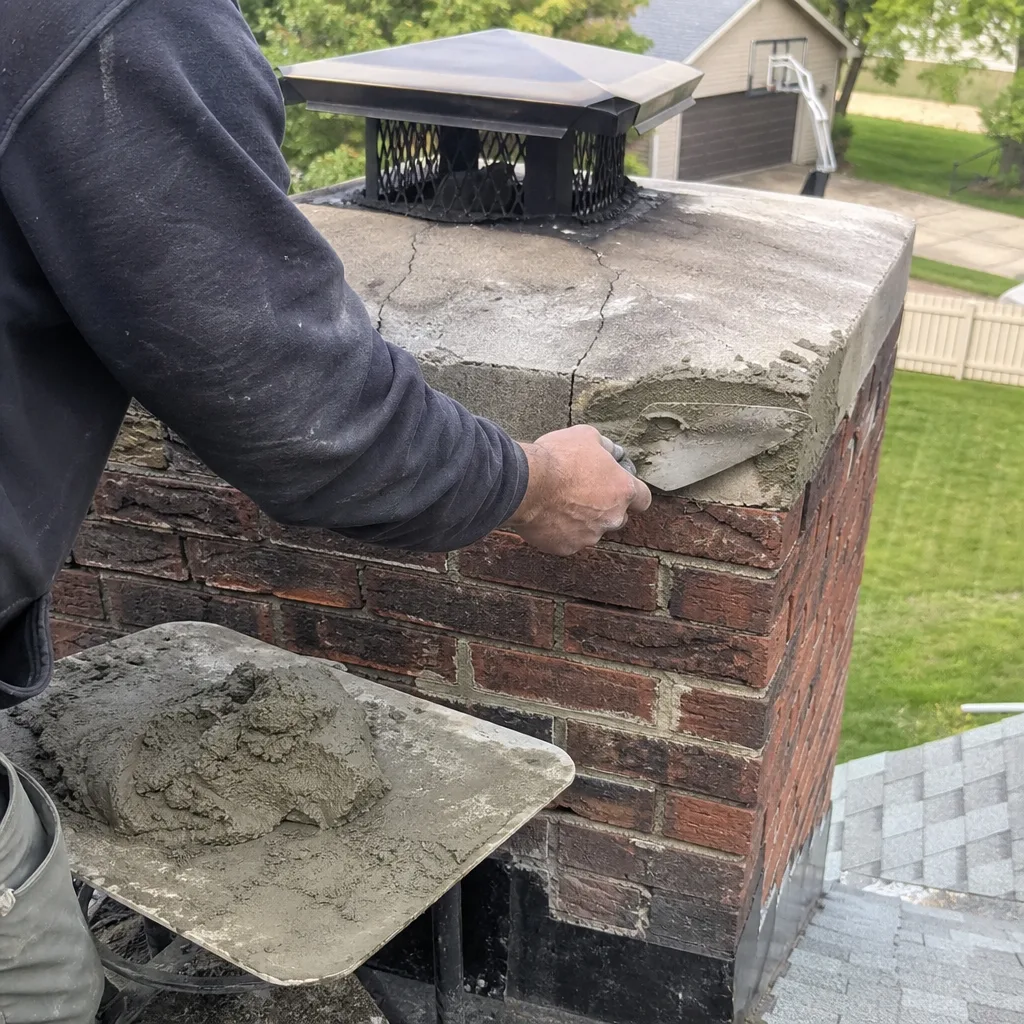
Orland Park’s housing stock includes thousands of homes built between 1965 and 1995 with clay-tile flue liners - the standard of that era. These liners are durable when dry and properly maintained, but they fail predictably when moisture intrusion follows the freeze-thaw sequence. Understanding this sequence helps you recognize which repair stage you’re in and what it costs.
Stage 1: Crown failure. Water enters through cracks or deterioration in the concrete crown. This is the cheapest intervention point. Crown repair or replacement typically runs $350-$800 in the Orland Park market, depending on accessibility and whether the flue tile top needs rebedding. HeatShield CrownSeal application, suitable for crowns with intact structure but surface cracking, runs $400-$600 and carries a 10-year warranty when applied by a certified technician.
Stage 2: Mortar joint degradation. Water that passes the crown saturates the mortar joints between flue tiles. Each freeze-thaw cycle widens these joints. By the time joint separation is visible on camera, water is traveling laterally between the flue liner and the surrounding masonry. Repointing accessible joints is possible in some cases; more commonly, we see joint failure that requires liner repair or replacement. Stage 2 intervention typically runs $1,200-$2,500.
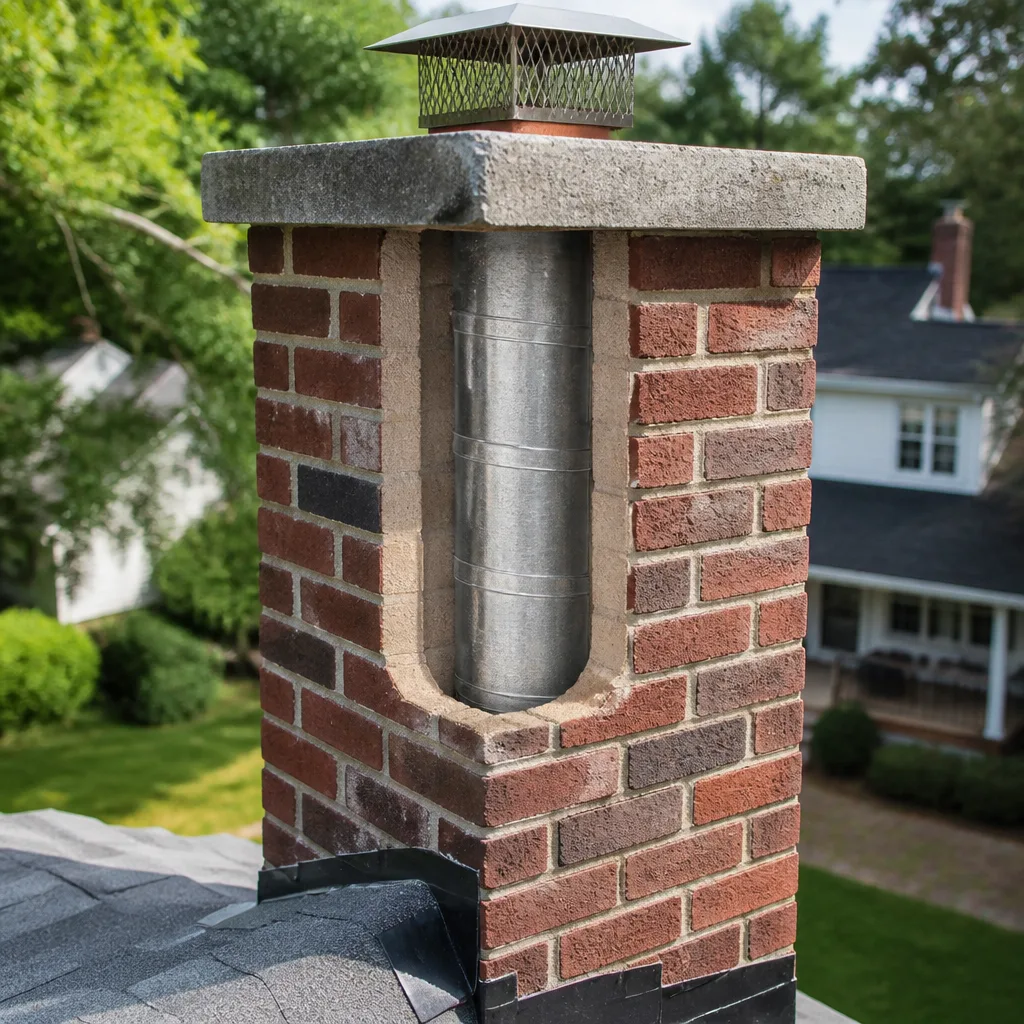
Stage 3: Liner spalling and flue gas leakage. Water reaching the interior of the clay tile causes spalling - the flaking of the tile inner surface. This creates roughness that accelerates creosote buildup and, more critically, creates gaps where flue gases can escape the liner and enter the chimney structure. Carbon monoxide risk emerges here. Stage 3 requires liner repair with a stainless steel relining system (DuraFlex or equivalent) or complete liner replacement. Costs in Orland Park typically range from $2,800-$5,500 depending on flue height, diameter, and number of appliance connections.
Stage 4: Structural masonry damage. Sustained moisture and freeze-thaw cycling compromise the chimney structure itself - spalled brick, deteriorated wythes (the internal walls separating flues in multi-flue chimneys), or leaning. At this stage, partial or complete rebuild is necessary. Costs exceed $8,000 and the chimney is unsafe to use until repaired.
The April inspection window catches most Stage 1 and early Stage 2 conditions. Fall inspections, focused on pre-burn safety, often miss Stage 1 entirely because summer contraction has temporarily closed crown cracks. This is why we emphasize the spring primary inspection - it’s the only window where the full moisture intrusion sequence is visible and documentable.
Our Chimney Repair in Orland Park services address each stage with written scope and price before work begins, documented photo record on completion, and the 365-Day Done Right Promise. We don’t recommend liner replacement without camera evidence you can see yourself - Haven Standard Clause 4 requires the photo record precisely so you can verify our findings independently.
What to Store in Your Seasonal Chimney File
The homeowners who avoid major chimney expenses maintain a simple file: dated photos, inspection reports, and burn records compared year-over-year. This isn’t elaborate. It takes fifteen minutes per season and creates the documentation trail that catches progressive deterioration before it becomes structural failure.
Your seasonal chimney file should include:
- Spring exterior photos: Four standard angles - straight-on from the street, close-up of the crown, close-up of the south/west exposure, close-up of flashing. Take them from the same position each year. Store with date stamps. When you compare April 2024 to April 2025, you’ll see spalling progression, crack widening, or new staining that single-year inspection misses.
- Inspection report and camera footage: If you hire Emberly Chimney Cleaners Orland Park, you receive a documented photo record on every visit - Haven Standard Clause 4, continuous since 2009. Store the PDF and any video links. If you use another provider, request still images of the flue interior, crown, smoke chamber, and firebox at minimum.
- Written scope and price for any work performed: This establishes baseline costs for future comparison and warranty documentation. Haven Standard Clause 1 requires written price before work starts; your copy belongs in this file.
- Burn log: Simple tracking of fire dates, duration, and wood source. This helps you estimate creosote accumulation and predict when you’ll hit the cord or use-hour thresholds that trigger off-cycle cleaning.
- Weather notes: Record severe storms, hail dates, and notable freeze-thaw events. Orland Park’s 2022-2023 winter delivered 24 freeze-thaw cycles with a late February ice storm that caused concentrated crown damage; homeowners with weather records could correlate exterior changes to specific events.
Digital storage is fine - a dedicated folder with subfolders by year. Physical backup of inspection reports is wise for insurance purposes. The key is consistency: same angles, same timing, same documentation. Progressive deterioration becomes obvious when you have three to five years of comparable images. Without comparison, a cracked crown in year three looks like a new problem when it’s actually the culmination of four winters of damage.
We provide our customers with a summary sheet after each inspection indicating exactly what to photograph and when, matched to their chimney type and age. It’s part of the documented record - not a separate service, not an upsell.
Common Mistakes to Avoid
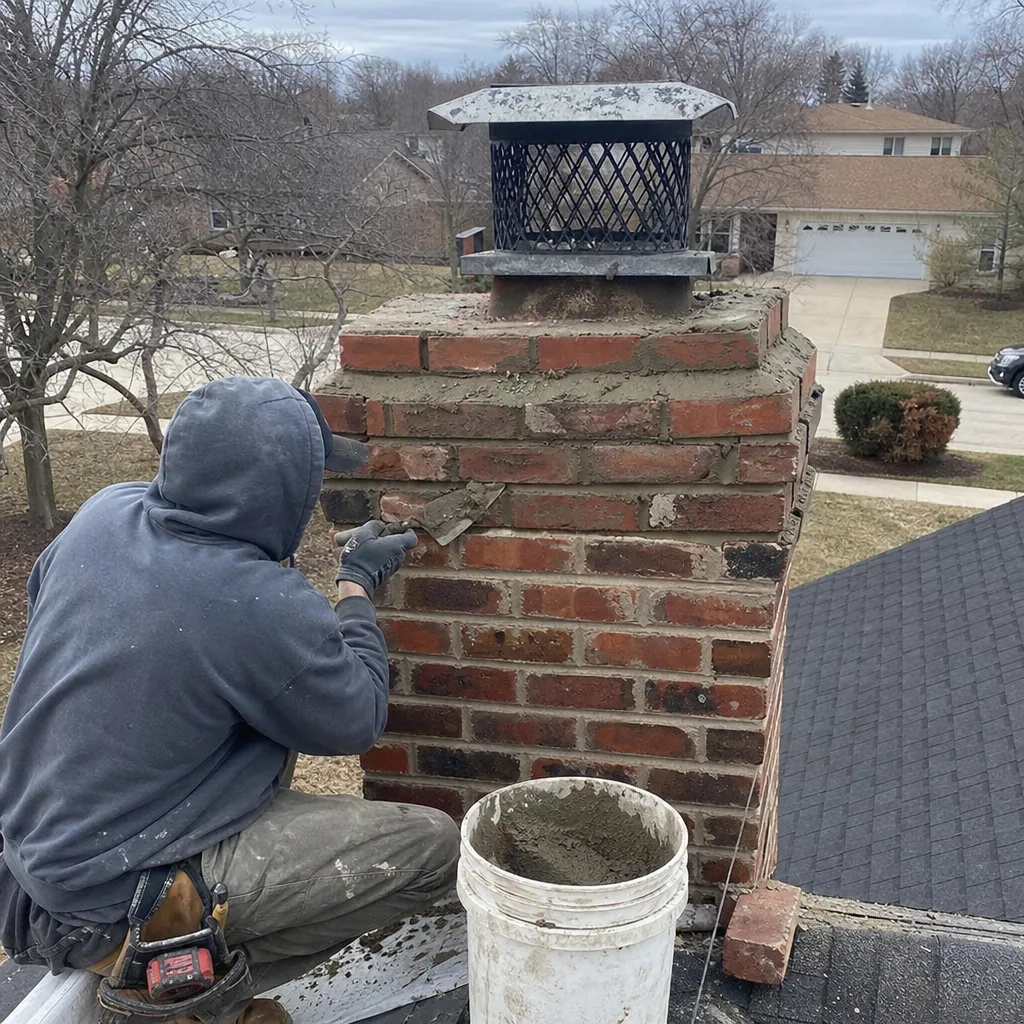
- Waiting for fall to schedule the only annual inspection. In Orland Park, this misses the freeze-thaw damage window entirely. By October, summer contraction has partially closed cracks and the next damage cycle hasn’t begun. You’re inspecting at the point of minimum visibility.
- Assuming “no problems last year” means no problems this year. Clay-tile liner deterioration is progressive and nonlinear. A crown crack that was 2mm in 2023 can become 8mm with mortar joint separation by 2025, with no visible interior change until Stage 3. Year-over-year comparison catches this; single-year inspection doesn’t.
- Burning unseasoned wood to “save money.” Wood with moisture content above 25 percent produces Class III creosote at roughly three times the rate of seasoned hardwood. In Orland Park, where local suppliers sometimes sell “this year’s cut” oak, verify moisture with a $20 meter. The cost of extra cleaning exceeds any wood savings.
- Ignoring draft symptoms as “just how this fireplace is.” Smoke spillage, slow draft establishment, or odors between fires are not character traits. They’re mechanical symptoms of blockage, damage, or pressure imbalance. Dismissing them delays intervention until the repair cost multiplies.
- Accepting verbal estimates or post-work billing. Every chimney service in Orland Park should provide written scope and price before work begins. Verbal quotes create scope disputes. Post-work billing removes your ability to compare or decline. Haven Standard Clause 1 exists because we saw this practice damage homeowners repeatedly.
- Storing firewood against the house or under a covered porch without airflow. Orland Park’s humid summers prevent proper seasoning in enclosed spaces. Stack wood off-ground, uncovered on top, with side airflow, for minimum 12 months. Kiln-dried wood from Famco or other suppliers is an alternative if you need burnable fuel within six months of purchase.
When to Call a Professional
Call for inspection when you observe new exterior masonry damage in spring, draft behavior changes in winter, or before first use if you skipped the prior spring inspection. Call immediately if you experience smoke spillage into the living space, visible flame or sparking in the flue, or carbon monoxide detector activation near the fireplace. These are not maintenance scheduling questions - they’re safety events.
For scheduled inspection and maintenance, Emberly Chimney Cleaners Orland Park home offers free estimates throughout Orland Park and surrounding communities. Every estimate includes a written price, written scope, and written warranty before any work begins - Haven Standard Clause 1. Camera-scan inspection with documented photo record is included as standard, not optional - Haven Standard Clause 4, our practice since 2009. Call (708) 294-2571 to schedule. Live phone support is available 24 hours a day, seven days a week.
Frequently Asked Questions
A standard chimney cleaning and Level 2 inspection in Orland Park typically ranges from $250 to $450, depending on flue accessibility, creosote class, and whether the fireplace is a straightforward open hearth or a multi-bend flue system with an insert. For detailed pricing factors, see our Chimney Cleaning Cost Breakdown: The Orland Park Homeowner’s Reference for 2026. We deliver a written price before any work starts - no exceptions, no post-work surprises. Call (708) 294-2571 for an exact quote; estimates are free.
Clay tile can sometimes be repaired if the damage is limited to isolated spalling or single-tile cracks with intact surrounding structure. We determine this with camera inspection, not guesswork. If we recommend liner replacement, you’ll see the camera footage showing the damage location, classification, and why repair isn’t viable. Nothing is recommended without photo evidence you can review yourself - Haven Standard Clause 4. In many Orland Park homes built 1975-1995, partial relining with a stainless steel DuraFlex insert preserves functional tile while sealing damaged sections, at roughly half the cost of full replacement.
For average use - one cord of seasoned hardwood per year, or 20-30 hours of gas log operation monthly - once per year is sufficient, with the primary inspection in April-May. For heavier use, apply the cord or use-hour thresholds: inspect at two cords or 40 hours monthly, clean at three cords or 60 hours monthly. Annual minimum regardless of use, because wildlife, moisture, and structural deterioration occur independent of burn frequency.
With low use and no visible symptoms, probably nothing immediate. With regular use, creosote accumulates, draft efficiency declines, and the risk of chimney fire increases - not dramatically in year one, but measurably by year two if you’re burning regularly. More importantly, you miss the progressive masonry damage that the spring inspection window is designed to catch. The homeowner who skips two years and then calls with water stains on the ceiling is typically facing Stage 3 or 4 moisture intrusion, not a simple cleaning. The cost difference between caught-early and caught-late is usually $2,000 to $6,000.
Homeowner visual checks of the exterior, cap, and firebox are valuable and we encourage them - that’s why we specify what to photograph each season. But flue interior inspection requires specialized camera equipment, lighting, and training to interpret what the camera reveals. NFPA 211 Level 2 inspection, which we perform on every service visit, includes evaluation of accessible portions of the chimney structure and flue liner that a homeowner cannot reach or assess. The camera doesn’t just find problems; it documents them with dated evidence for your file and, if needed, your insurer.
Orland Park’s specific combination of clay-heavy soils, relatively flat terrain that allows cold air pooling, and a housing stock heavy on 1970s-1990s clay-tile construction creates concentrated risk. The flat terrain west and southwest of the village - the former farmland now developed into subdivisions - experiences temperature inversions that drop lows 3°F to 5°F below forecast, extending freeze duration. And the clay-tile liner inventory is aging into the period where original installation quality variations become visible: some 1980s installations used lower-grade mortar that fails predictably at 25-30 years. We’re now in that window for much of Orland Park’s housing stock.
The Bottom Line
Orland Park’s chimney calendar should run on freeze-thaw cycles, not burn season. Inspect in April-May when damage is visible. Verify storm integrity in late summer. Confirm pre-burn safety in early fall. Monitor burn frequency for off-cycle cleaning triggers. Keep a seasonal file with dated photos compared year-over-year. And never accept a verbal quote or post-work bill - written price, written scope, written warranty before anyone starts, every time. The homeowners who follow this calendar catch $400 crown repairs before they become $4,000 liner replacements. The ones who don’t, call us in February with water in the firebox and a ceiling stain. Both groups get honest inspection and documented evidence. We’d rather see you in April with a minor repair.
Written by Corrine Halstead, Owner at Emberly Chimney Cleaners Orland Park, serving Orland Park since 2009.