
Last updated September 22, 2026
Level 1 sweep and inspection to the NFPA 211 annual standard - flue, crown, cap, and flashing checked and photographed
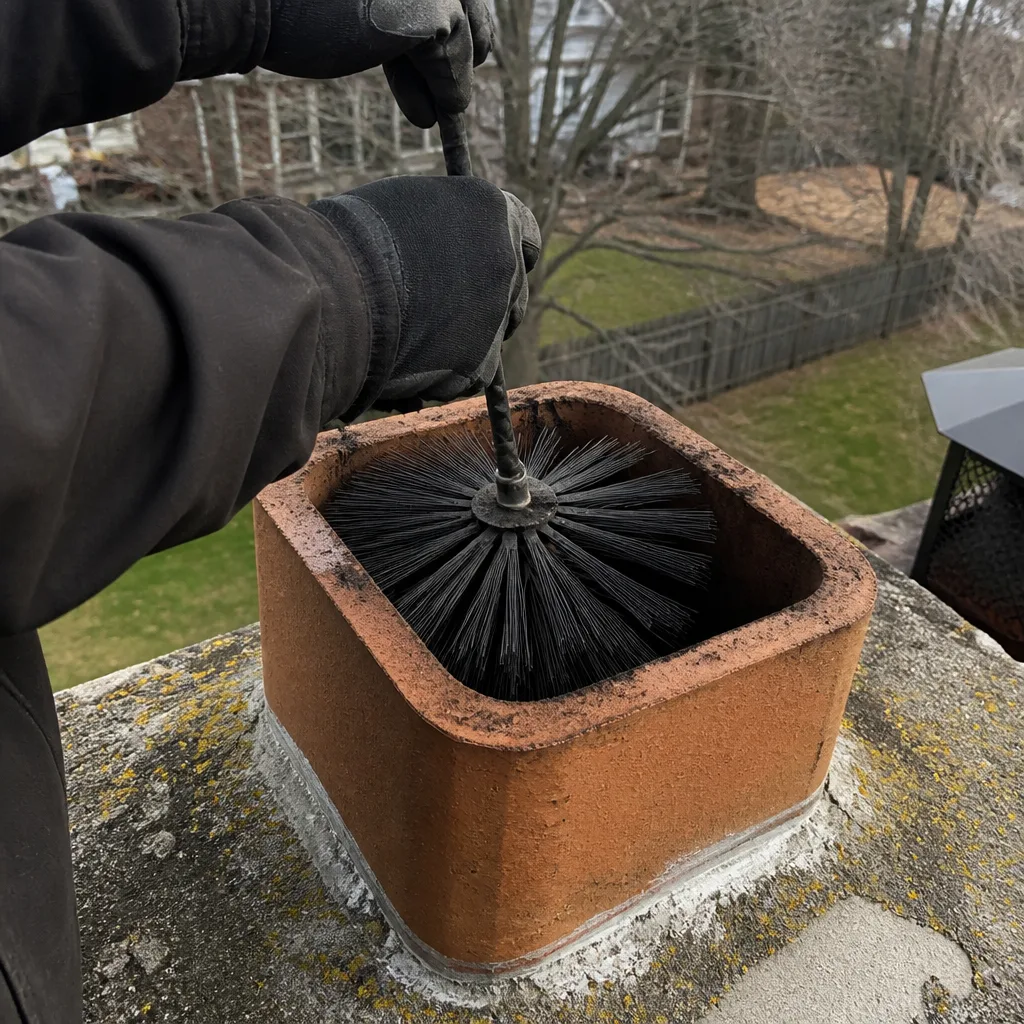
Chimney sweep logs do not sweep chimneys. They loosen some creosote - which then falls where a brush and vacuum still have to collect it.
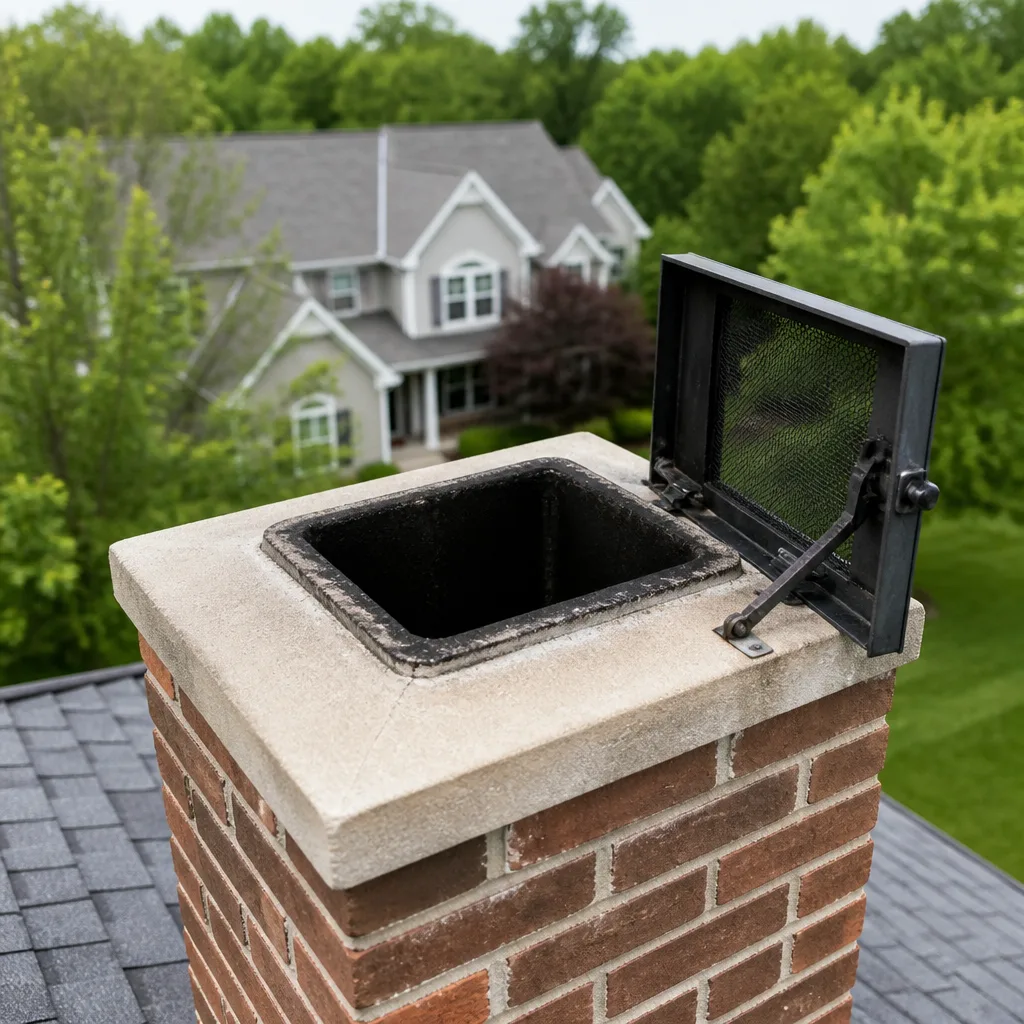
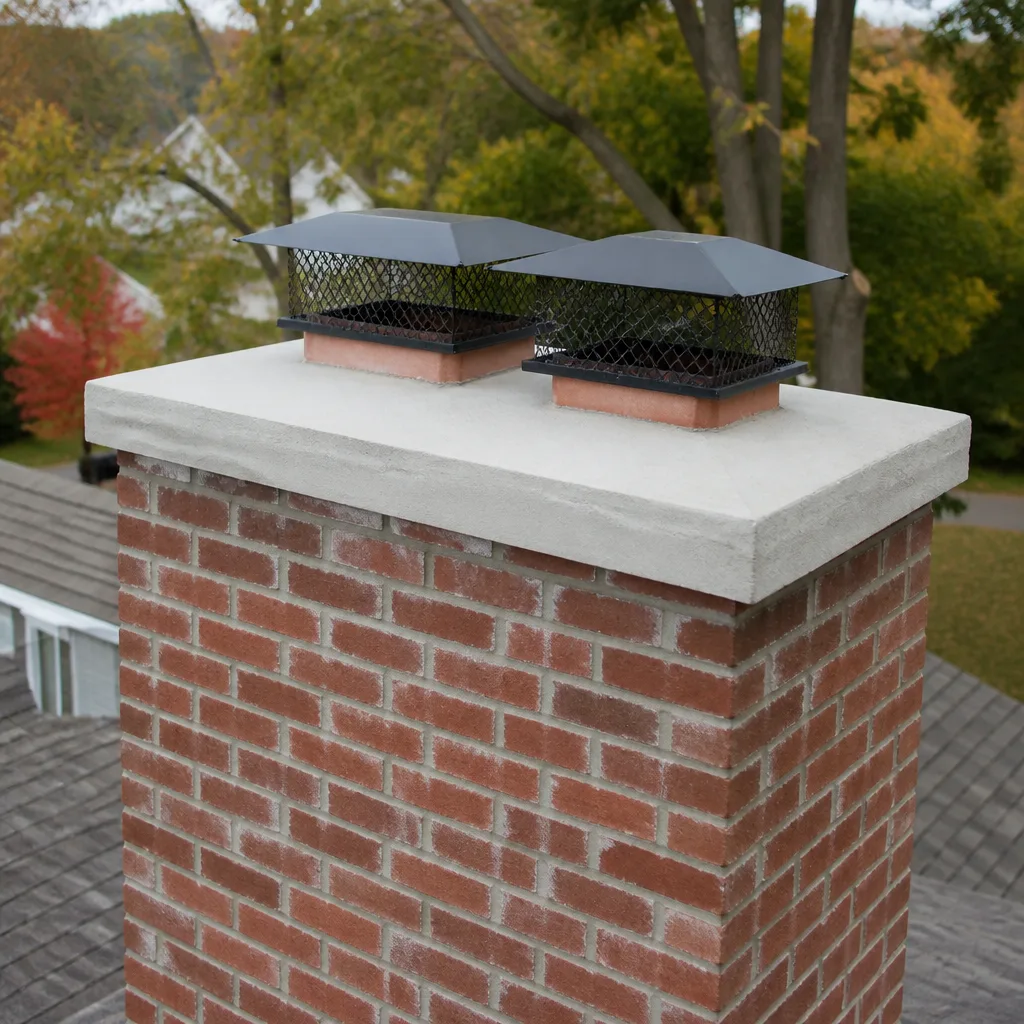
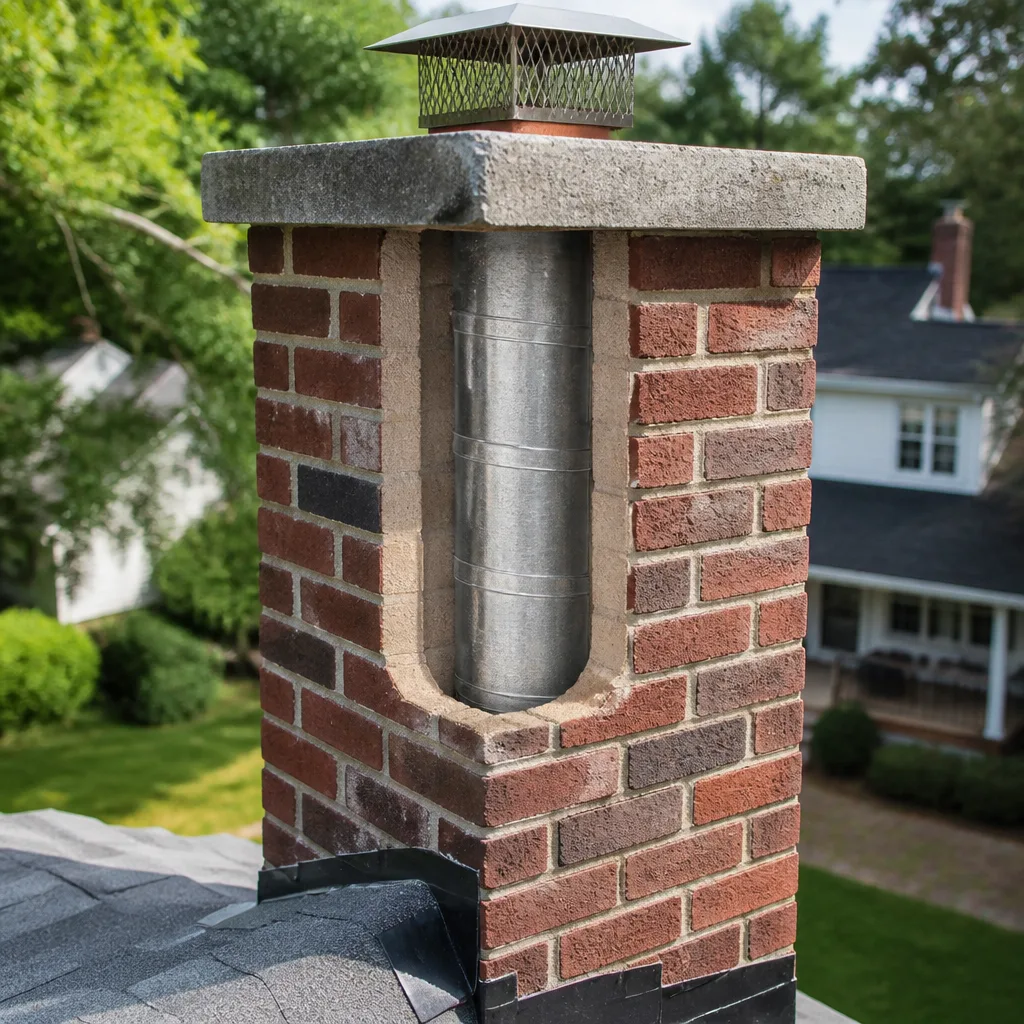
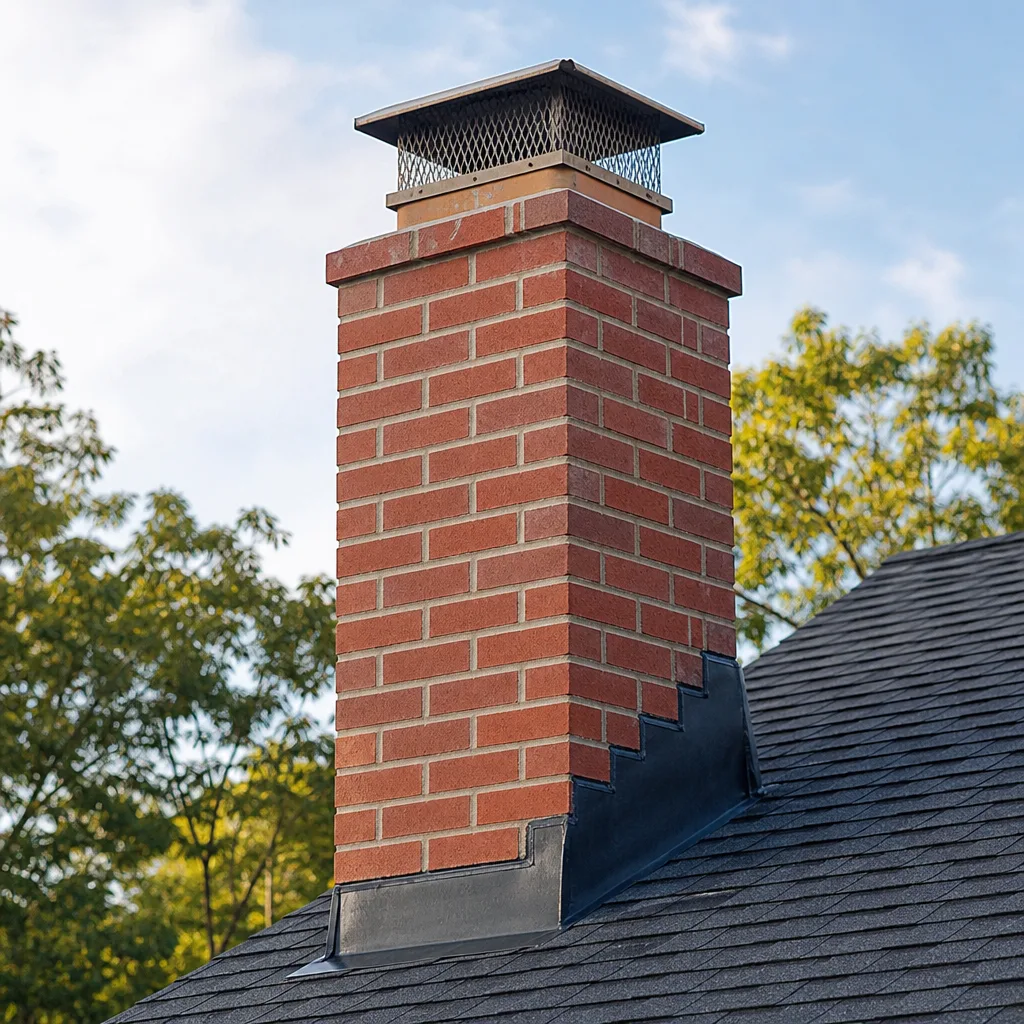
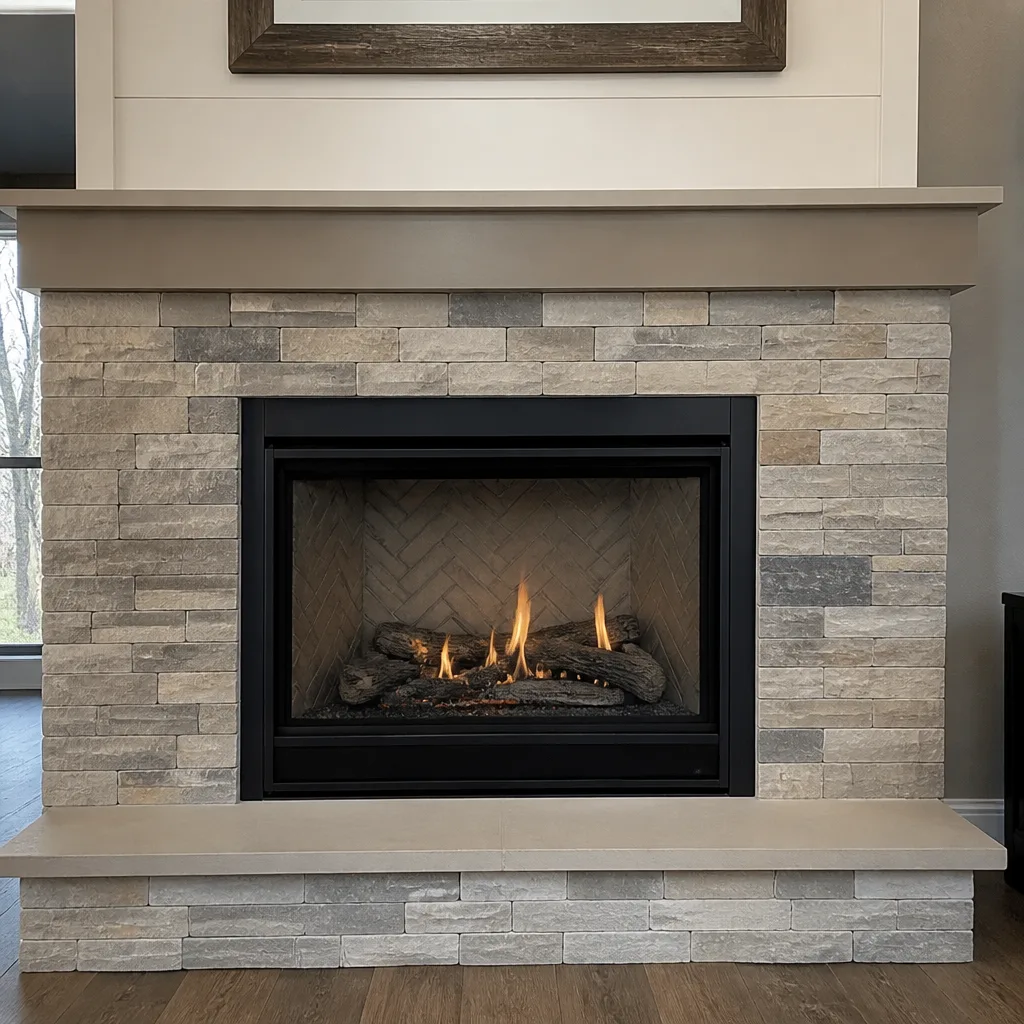
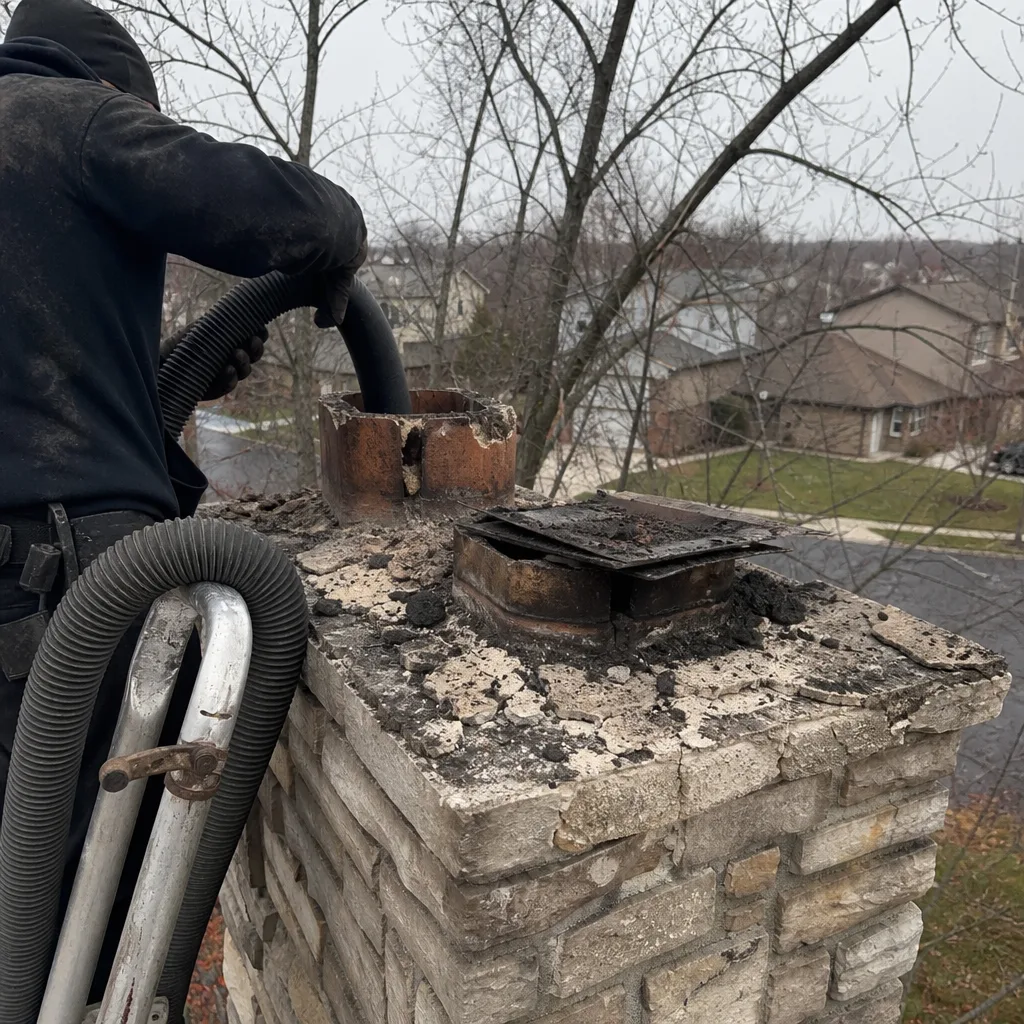 Before
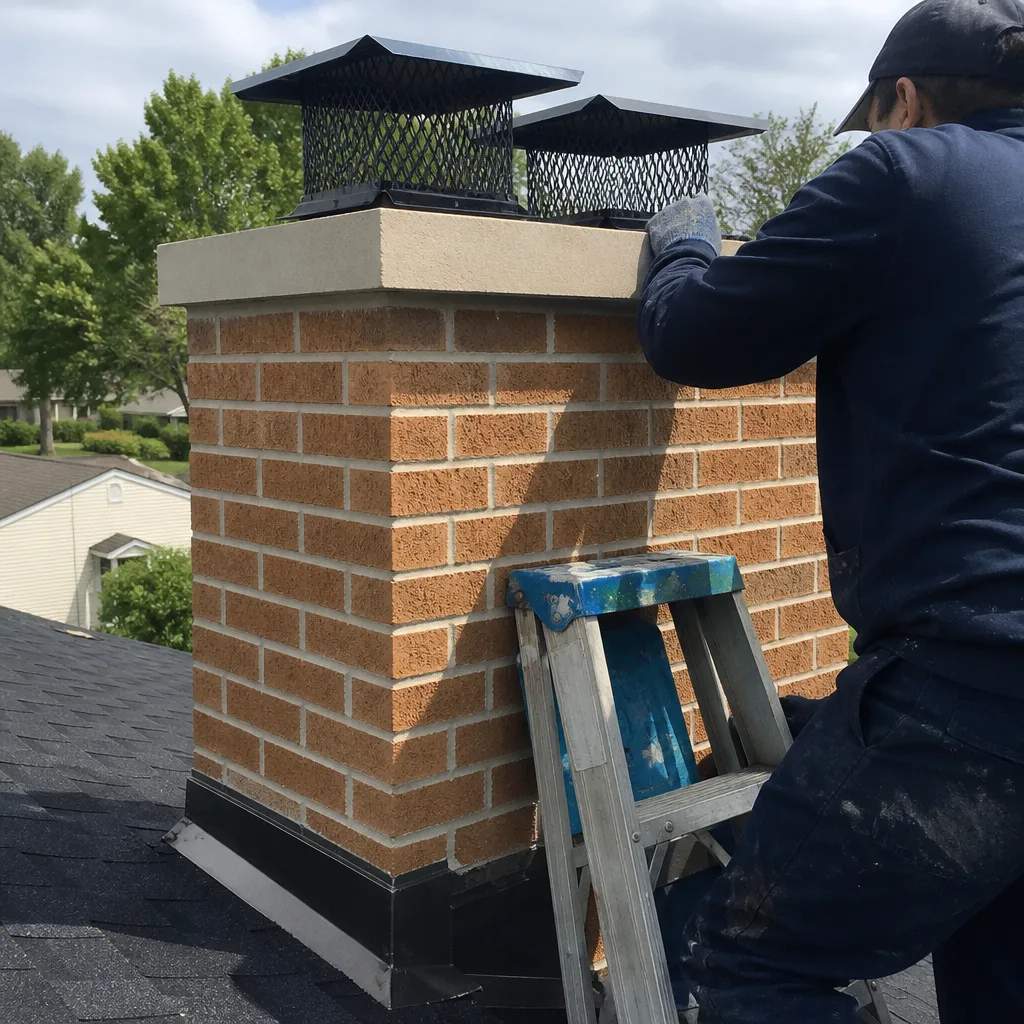 After
After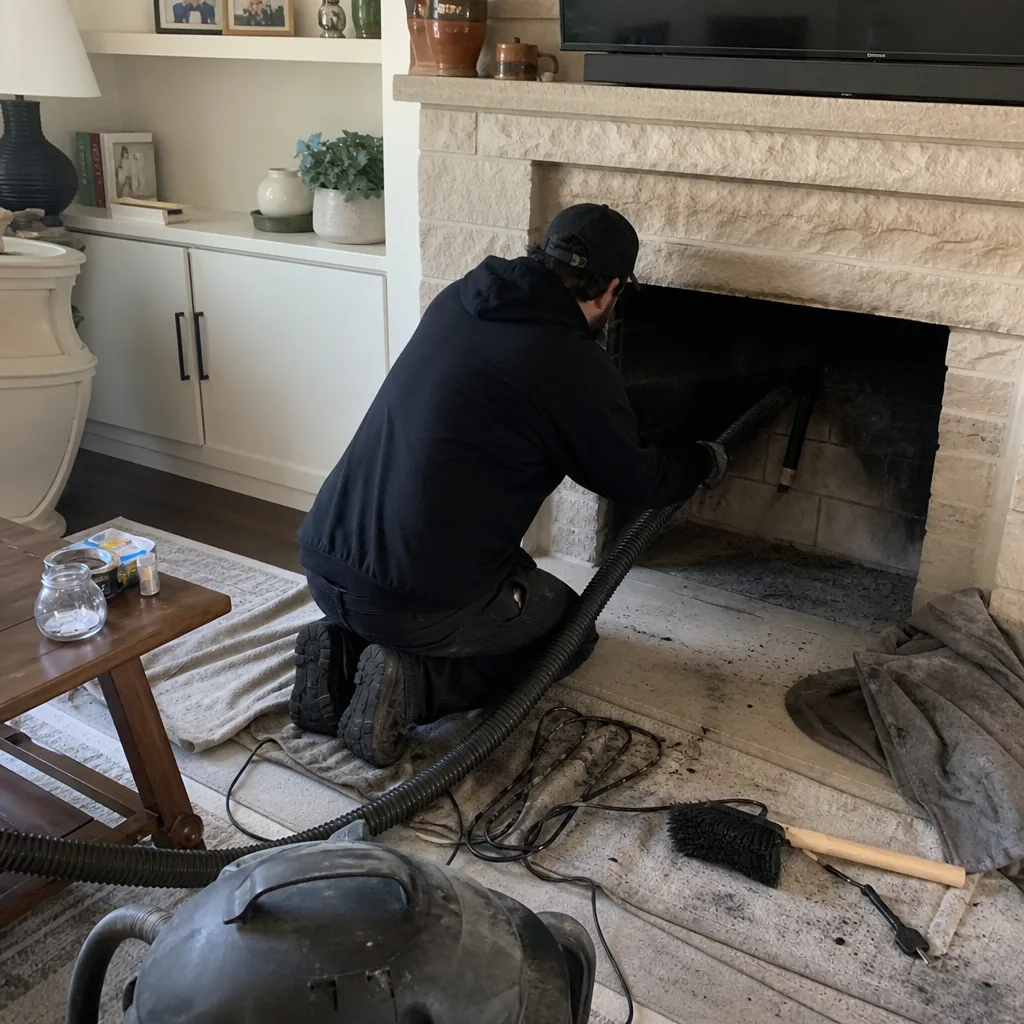 Before
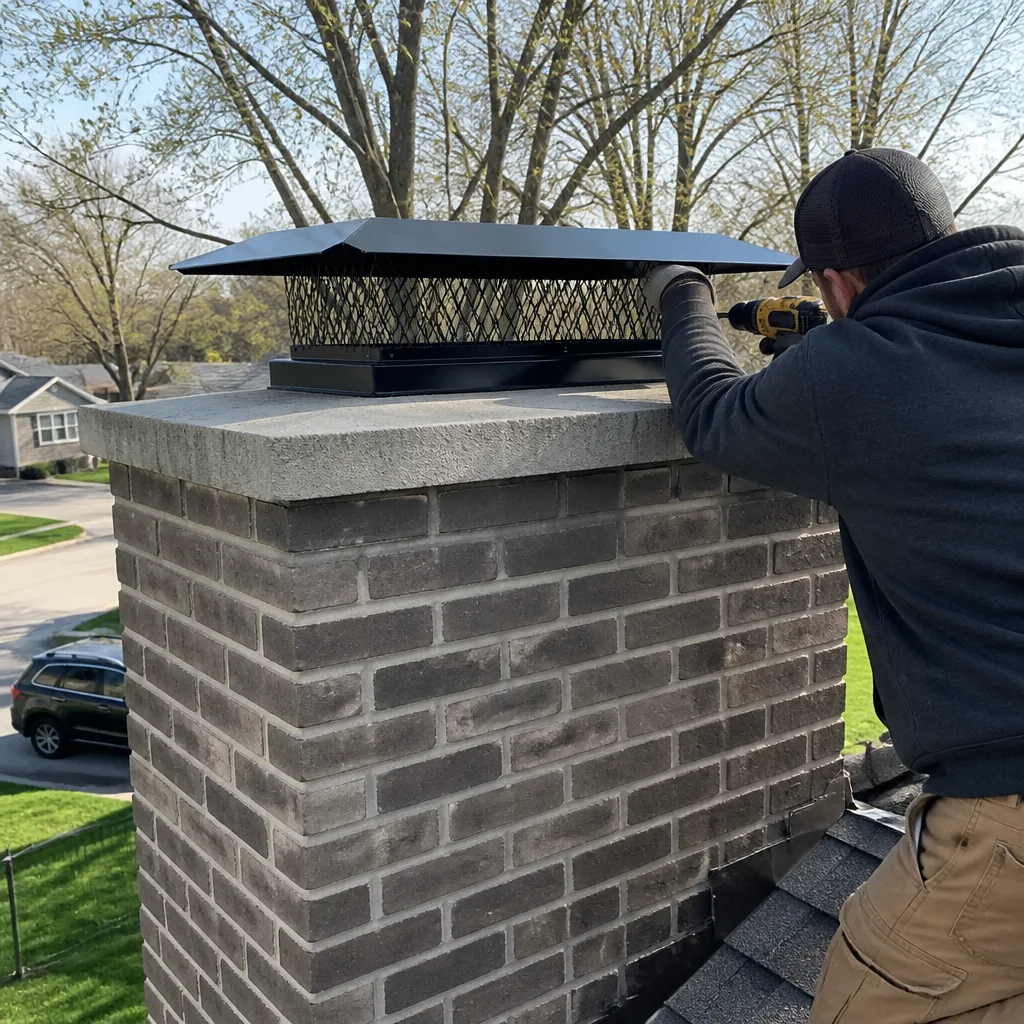 After
After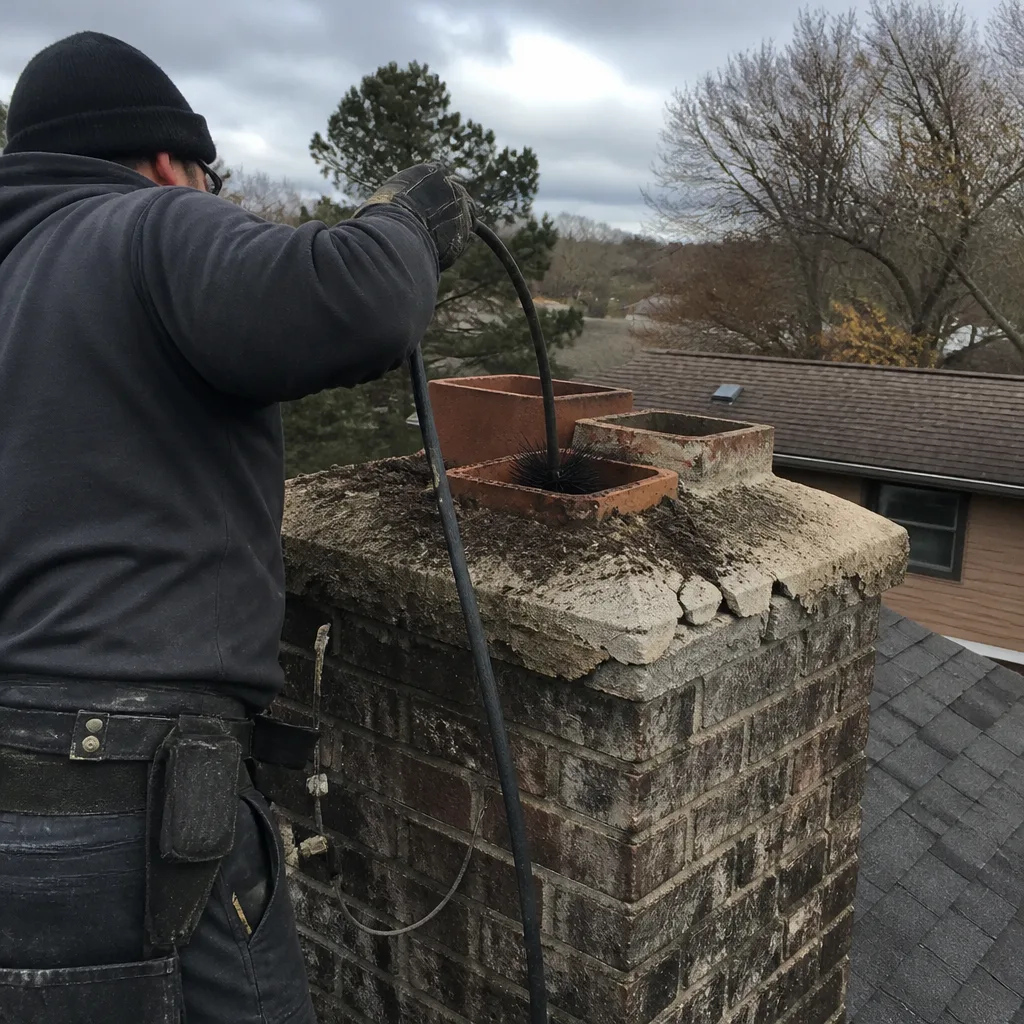 Before
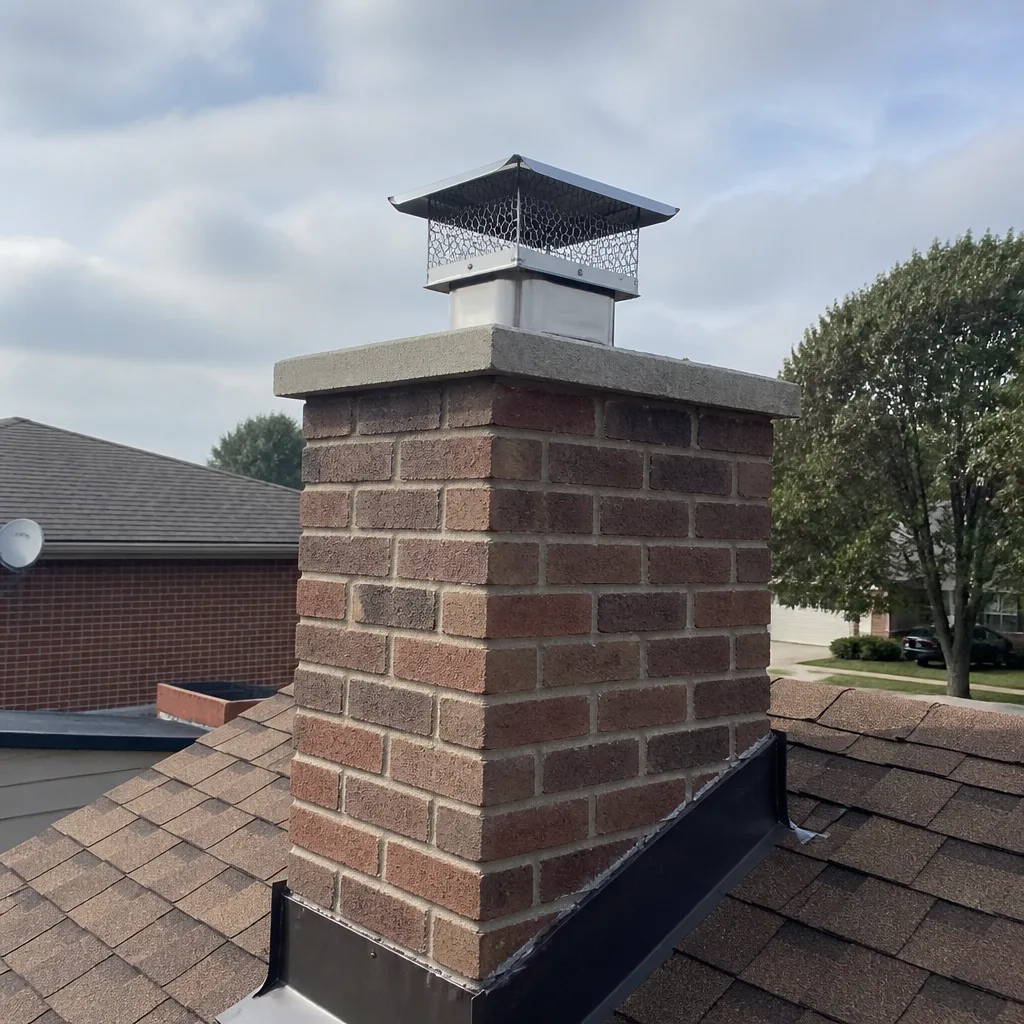 After
AfterChimney Cleaning Warning Signs: A Orland Park Homeowner’s Reference Guide
White smoke from your wood fire and gray smoke from your wood fire are two completely different problems. Most Orland Park homeowners report “smoke” to a sweep without distinguishing them, and that distinction changes the diagnosis entirely. Gray smoke usually means incomplete combustion from wet wood or a cold flue. White smoke can signal water vapor from a breached liner, which means combustion gases are leaking into your walls. This guide pairs every observable warning sign with the specific failure it indicates, the urgency level, and whether it can be confirmed without a camera or requires one. For the complete guide to chimney cleaning in Orland Park, see our dedicated resource. You’ll know exactly when to stop using your fireplace tonight and when it’s safe to keep burning until your next scheduled visit.
Quick Answer
The most serious chimney warning signs requiring immediate stop-use are combustion gas odor in your living space, visible smoke rolling out of the firebox into the room, and a damper that won’t fully open. Schedule-soon signs include heavy creosote smell during humid summer months, sluggish draft that makes fires hard to start, and spalling brick faces with mortar dusting. Most exterior warning signs, like minor efflorescence or small animal sounds, warrant monitoring and a camera inspection at your next annual sweep but don’t require emergency response. If you’re weighing whether to tackle maintenance yourself, our DIY vs professional chimney cleaning guide for Orland Park homeowners can help you decide.
Table of Contents
- Immediate Stop-Use Signs: When to Stop Burning Tonight
- Schedule-Soon Signs: Book Within Two Weeks
- Monitor Signs: Note and Inspect at Next Annual Visit
- Reading Smoke Colors: What White, Gray, and Black Indicate
- Draft Problems: Blockage vs. Pressure Diagnosis
- What Camera Scans Reveal That Flashlight Inspections Miss
- Orland Park Climate Factors Affecting Chimney Condition
- Common Mistakes to Avoid
- When to Call a Professional
- Frequently Asked Questions
BeforeAfterImmediate Stop-Use Signs: When to Stop Burning Tonight
These three signs mean the same thing: your chimney’s containment system has failed, and continuing to burn creates genuine risk of fire or carbon monoxide exposure. Do not use your fireplace until a Level 2 inspection with camera scan confirms the flue is intact.
Combustion Gas Odor in Living Space
If you smell smoke, exhaust, or a sharp, acrid chemical odor anywhere except directly at the hearth while a fire is burning, combustion gases are entering your home. This is not a draft issue you can solve by opening a window. It indicates either a breach in the flue liner, a disconnected stovepipe, or negative pressure so severe that exhaust is being pulled backward through the chimney.
In Orland Park, we see this most often in homes built between 1965 and 1985 with original clay tile liners. The freeze-thaw cycles here are severe, clay expands and contracts at a different rate than the surrounding masonry, and the upper third of the liner, where temperature swings are most extreme, develops hairline cracks that widen over seasons. A flashlight inspection from the firebox bottom cannot see these cracks. Only a camera scan reaching the upper flue can confirm them.
What to do: Extinguish the fire if safely possible. Open windows for ventilation. Do not burn again until inspection.
Visible Smoke Rollout
Smoke rolling out of the firebox into the room, rather than rising into the flue, indicates either a blocked flue or a severe pressure imbalance. The distinction matters because a blockage can sometimes be cleared, but a pressure problem requires mechanical investigation of your home’s HVAC and exhaust systems.
Check your damper position first. If the damper is fully open and smoke still rolls forward, the flue is obstructed or the chimney is unable to establish draft. Common blockages in Orland Park include squirrel nests in the spring, leaf debris from mature oak canopies in autumn, and collapsed clay tile fragments from older liners. Do not attempt to burn through a blockage. The restriction concentrates heat and can ignite creosote deposits above the obstruction.
Damper That Won’t Open Fully
A stuck or frozen damper is not a minor inconvenience. It prevents adequate oxygen supply for complete combustion, produces excess carbon monoxide, and can trap smoke in the firebox. In our experience across Orland Park, dampers seize due to creosote buildup on the hinge and track, rust from water intrusion, or physical deformation from chimney fires that homeowners didn’t realize occurred. When you need expert help, our guide on how to hire a chimney cleaning contractor in Orland Park walks you through the selection process.
If the damper opens partially but binds, you may have a localized creosote deposit that a sweep can remove. If it won’t move at all, assume liner damage above and stop using the fireplace until camera inspection confirms the cause.
Schedule-Soon Signs: Book Within Two Weeks
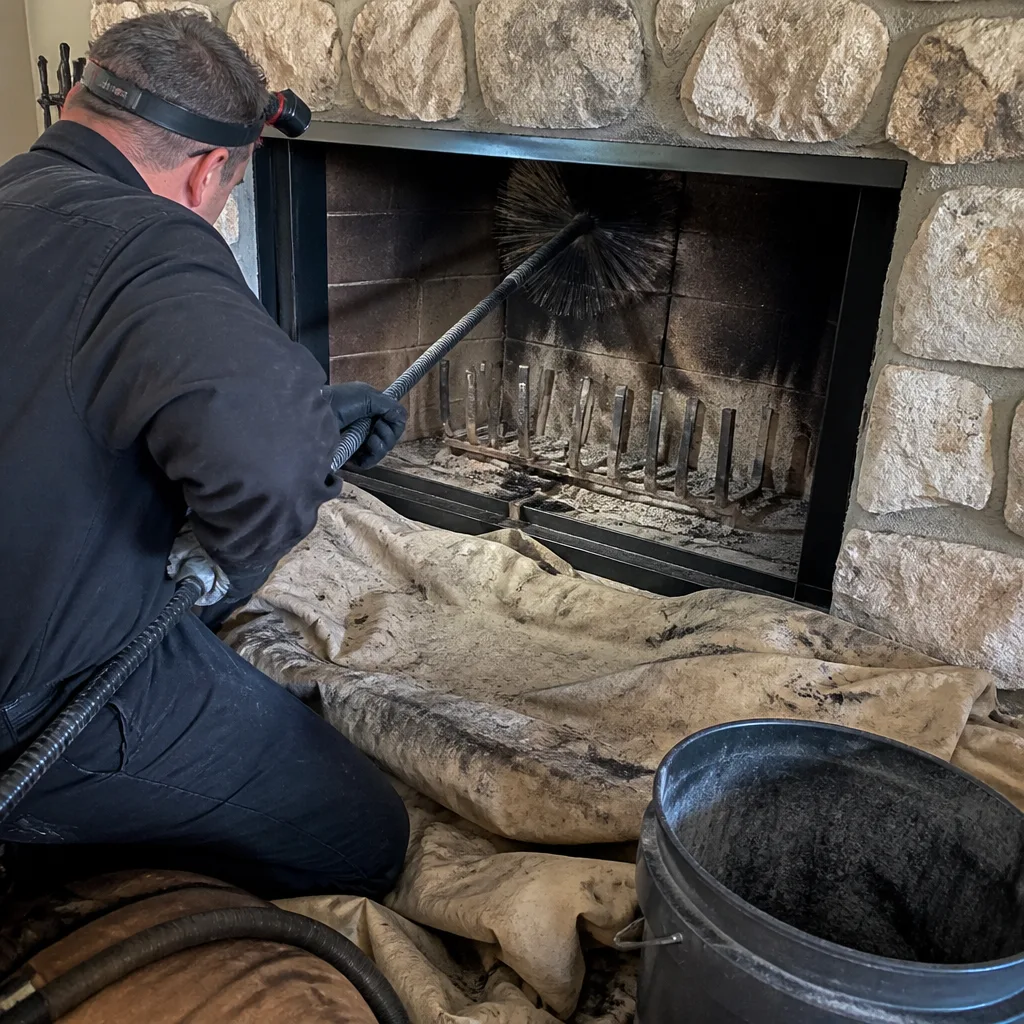
These signs indicate developing problems that will worsen but don’t create immediate hazard under normal use. Schedule a Level 2 inspection and cleaning within two weeks, and reduce fireplace use until then.
Heavy Creosote Smell in Summer
This is the warning sign most Orland Park homeowners misinterpret. A strong tar-like or smoky odor from your fireplace during humid summer months does not mean your chimney is actively on fire. It means three conditions are present: glazed creosote deposits inside the flue, humid air entering the chimney, and negative pressure in your home drawing that air, and its odor, into your living space.
The odor tells you something specific about liner condition. Glazed creosote, or Class III creosote, forms when wood burns at low temperatures and the resulting vapor condenses on cool flue walls, then repeatedly reheats and hardens into a glassy, nearly impossible-to-remove layer. It requires mechanical removal with chains or rotary whips, not standard brushing. The presence of significant glazed creosote almost always means your liner has been operating below optimal temperature, which in turn means either you’re burning wet wood, your flue is oversized for your appliance, or the liner has deteriorated to the point that it cools too quickly.
In Orland Park’s climate, we see this pattern frequently in homes with exterior chimneys on north-facing walls, where the masonry never fully warms through winter. The glazed layer acts like insulation, further cooling the flue and accelerating accumulation. A standard sweep won’t remove it. You need a sweep equipped for mechanical de-glazing and a camera inspection to assess whether liner sizing or damage is contributing to the problem.
Sluggish Draft
Fires that are hard to start, smoke that lingers in the firebox before rising, or needing to hold newspaper high to get flame to draw upward, all indicate draft that’s weaker than it should be. The critical question is whether the cause is blockage or pressure.
Blockage causes include:
- Partial nest or debris accumulation
- Creosote buildup narrowing the flue diameter
- Collapsed liner tile creating an obstruction
- Improper chimney cap design restricting airflow
Pressure causes include:
- Tight home construction with inadequate makeup air
- Kitchen range hoods, bathroom exhaust fans, or dryers competing for air
- HVAC return duct location creating suction near the fireplace
- Weather patterns producing strong outdoor pressure differentials
The diagnostic test is simple but requires two people. With the firebox cold, open the damper and hold a thin ribbon of tissue at the throat. It should draw inward steadily. If it draws weakly or blows outward, have someone turn on the kitchen range hood on high. If draft worsens further, you have a pressure problem. If draft doesn’t change, suspect partial blockage. Either way, a camera scan confirms what’s happening in the flue itself.
Spalling Brick Face and Mortar Deterioration
Spalling is when the face of a brick flakes or pops off, exposing the softer interior. In Orland Park, this is almost always freeze-thaw damage: water enters micro-cracks in the brick or mortar, expands when frozen, and fractures the surface. The mortar between bricks dusts or crumbles for the same reason.
Spalling on the chimney exterior indicates water intrusion, and water intrusion indicates crown failure, cap failure, or flashing deterioration. More critically, water that reaches the exterior brick has already passed through the chimney structure, which means it has contacted the flue liner. Clay tile liners absorb moisture, expand, and crack. Stainless steel liners corrode at joints. The spalling you see outside predicts liner damage inside with a lead time of roughly 12-18 months in our local climate data.
This is not an emergency unless water is actively entering your home. It is, however, a sign that your chimney’s waterproofing system has failed and the liner is being subjected to conditions that will degrade it. Schedule inspection before the next heating season.
Monitor Signs: Note and Inspect at Next Annual Visit
These signs warrant documentation and discussion at your next scheduled sweep, but they don’t require unscheduled service unless they worsen.
Minor Efflorescence on Exterior Chimney
White powdery residue on the exterior brick face is efflorescence: mineral salts carried to the surface by moisture and left behind when water evaporates. Many homeowners mistake it for cosmetic discoloration or clean it off without investigating the source.
Efflorescence is a specific moisture-and-freeze signal. It means water is moving through the masonry matrix, dissolving soluble salts, and transporting them to the surface. In Orland Park’s climate, this process accelerates dramatically between November and March, when freeze-thaw cycles occur every few days. The moisture causing efflorescence is also reaching the flue liner, and the thermal cycling from repeated freezing is stressing liner materials beyond their design tolerance.
Our records from 38,000+ inspections show that chimneys with active efflorescence develop visible liner damage, requiring repair or replacement, approximately 12-18 months after efflorescence first appears. The timeline shortens if the chimney is on a north or east exposure where sun never fully dries the masonry. Document the location and extent with photos, monitor for expansion or new areas, and request camera attention to the corresponding interior section at your next sweep.
Slight Mortar Dusting
Fine sand-like particles on the firebox floor or hearth indicate mortar degradation inside the flue. This is normal at very low levels in chimneys over 30 years old. It becomes concerning when the particles increase between sweeps or are accompanied by larger fragments. The dust is masonry material abraded by thermal expansion, freeze stress, or mechanical damage from cleaning tools used without proper technique.
Note the color. Gray or buff dust matches firebox mortar and may indicate localized deterioration. Red dust suggests clay liner tile degradation, which requires immediate camera inspection regardless of quantity.
Small Animal Sounds
Scratching or chirping from the chimney, typically in spring or early summer, usually means a squirrel or bird has accessed the flue through a missing or damaged cap. This is not an emergency for your safety, but it is an emergency for the animal and will become an emergency for your chimney if the animal dies and decomposes or builds a nest that blocks the flue.
Do not attempt to smoke out an animal. In Orland Park, we most commonly find juvenile squirrels that have fallen past the damper and cannot climb out. A professional can remove the animal humanely, install proper screening, and camera-inspect for damage to the liner from claws or panicked movement.
Reading Smoke Colors: What White, Gray, and Black Indicate
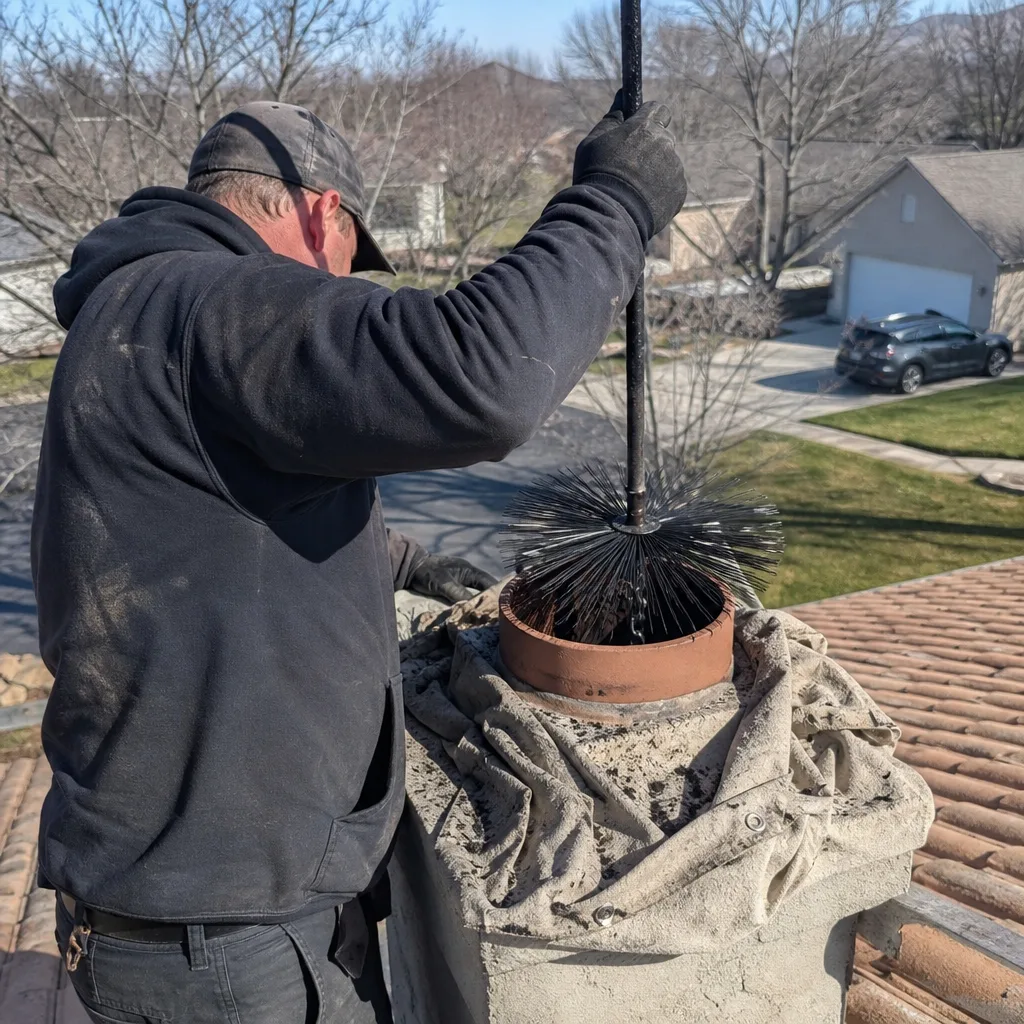
The color of smoke from your wood fire is diagnostic information that most homeowners never learn to read. Here’s what each color means and what action it requires.
| Smoke Color | What It Indicates | Required Response |
|---|---|---|
| White, billowing | Water vapor mixing with combustion gases; breached liner or major water intrusion | Stop burning immediately; schedule Level 2 inspection |
| Gray, persistent | Incomplete combustion; wet wood, cold flue, or inadequate air supply | Check wood moisture, open damper fully, warm flue before loading; if persists, inspect for blockage |
| Black, dense | Rich combustion with excess fuel; normal at startup, abnormal if sustained | Reduce fuel load, ensure adequate air; sustained black smoke indicates possible flue restriction |
| Yellow-brown, oily | Volatile compounds from treated wood, plastics, or painted materials | Extinguish immediately; burning these materials releases toxic compounds and accelerates creosote |
White smoke specifically deserves attention because it’s the color most often misreported. Homeowners describe “smoke in the house” or “smoke coming back into the room,” and by the time we arrive, they’ve opened windows and the color information is lost. If you see white smoke, note whether it’s coming from the fire itself (normal steam from very dry wood in a hot fire) or from seams in the masonry, around the damper frame, or through wall cracks near the chimney chase. White smoke from the fire is steam. White smoke from the structure is a liner breach.
In Orland Park’s older neighborhoods like Old Orland and the streets near Centennial Park, we encounter original clay tile liners in homes built 1950-1975 that have developed longitudinal cracks from decades of thermal cycling. These cracks often leak combustion gases, visible as white smoke, before they fail completely. The camera scan finds them; a flashlight inspection from below does not.
Draft Problems: Blockage vs. Pressure Diagnosis
A weak or reversed draft looks identical from the firebox regardless of cause. The flame leans, smoke hesitates at the throat, or spills into the room. But blockage and pressure problems require completely different solutions, and misdiagnosing one as the other wastes money and leaves the hazard unaddressed.
Step-by-Step Draft Diagnosis
- Cold flue test: With no fire burning and the damper open, hold a smoke match or thin tissue at the flue throat. Note direction and strength of air movement. Inward draw is normal. Weak draw or outward flow indicates problem.
- Competing exhaust test: Have a second person turn on the kitchen range hood, bathroom fans, and clothes dryer, one at a time. Note which appliances affect draft. If draft weakens or reverses with any single appliance, you have a pressure problem.
- Window test: Open a window near the fireplace approximately six inches. If draft improves significantly, your home is too tight for the chimney to function without makeup air.
- Cap visual check: From ground level or with binoculars, verify the chimney cap is present and not visibly clogged with debris. Do not climb the roof.
Pressure problems in Orland Park have increased significantly since 2015 as home renovation trends emphasize air sealing, spray foam insulation, and high-CFM range hoods. We’ve inspected homes in the Mallard Point and Silver Lake areas where the chimney functioned perfectly until a kitchen renovation installed a 1200-CFM hood with no makeup air provision. The hood doesn’t “break” the chimney; it simply wins the competition for available air.
Blockage problems, by contrast, are physical obstructions in the flue. The camera scan shows exactly what and where: a nest at the flue shoulder, a collapsed tile fragment in the smoke chamber, or Class III creosote narrowing the effective diameter. A sweep can clear most blockages. A pressure problem requires coordination with your HVAC contractor to install makeup air or adjust exhaust system design.
The critical point: a sweep who inspects only with a flashlight from the firebox bottom cannot distinguish these causes. The flashlight sees the first few feet of flue. The camera sees the full length, including the smoke chamber and upper third where most blockages and liner damage occur. Clause 4 of the Haven Standard requires a photo record on every job precisely because these distinctions are invisible without it.
What Camera Scans Reveal That Flashlight Inspections Miss
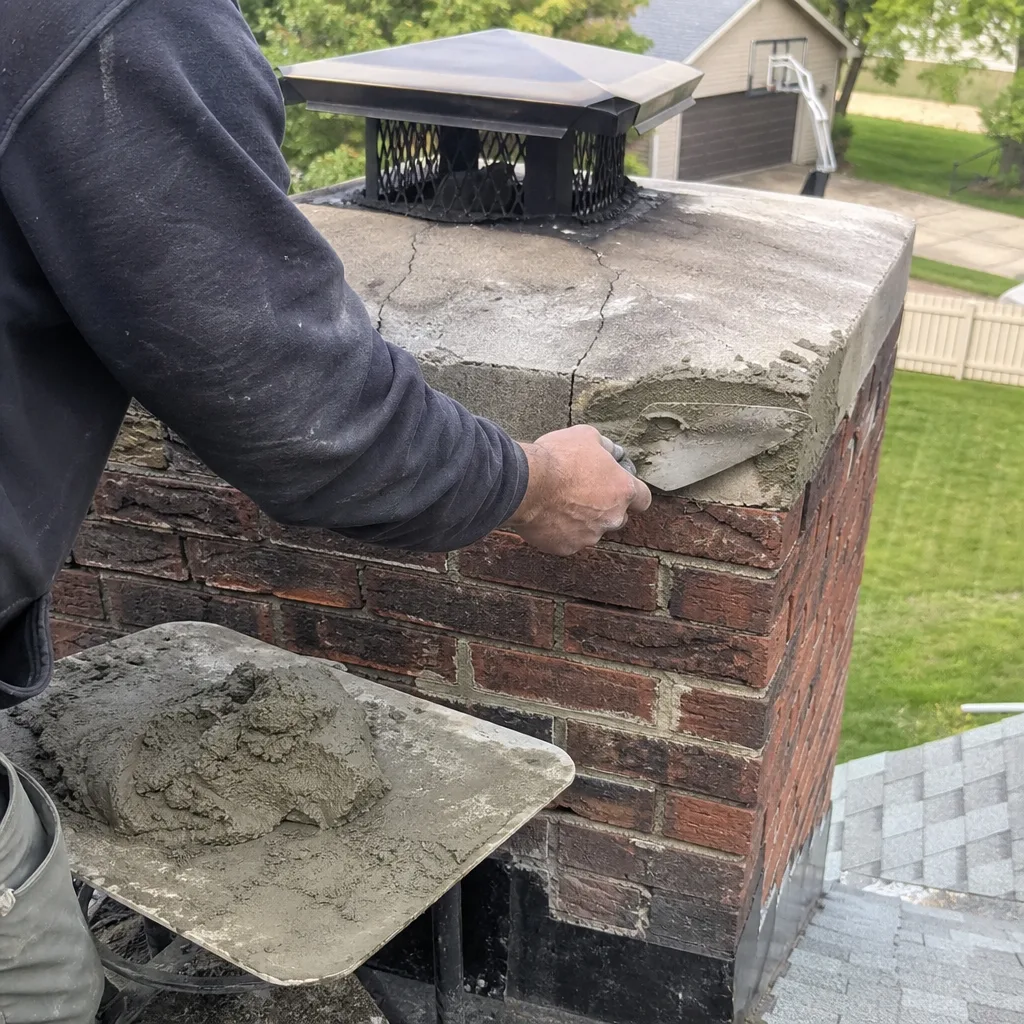
The National Fire Protection Association defines three levels of chimney inspection. Level 1 is visual, from accessible areas, with no tools. Level 2 adds camera scan of the flue interior and inspection of accessible portions of the chimney exterior and attic. Level 3 involves demolition of building materials and is reserved for suspected imminent hazards.
Most chimney sweeps in the Orland Park market perform Level 1 inspections as standard and offer Level 2 as an upgrade. At Emberly Chimney Cleaners Orland Park home, we’ve made Level 2 with camera scan the default on every visit since 2009, years before insurers or regulators required documentation. That practice became Clause 4 of the Haven Standard.
Here’s what the camera sees that a flashlight cannot:
- Upper third of the flue liner: The section above the roof line experiences the most extreme temperature swings. Clay tile cracks, stainless steel joint separation, and mortar joint failure concentrate here. A flashlight from below illuminates perhaps the bottom third of a two-story flue. The camera reaches the full length.
- Smoke chamber: The area above the damper and below the flue proper, where the chimney narrows. This is where most chimney fires begin, where creosote accumulates most heavily, and where parged (smoothed) surfaces deteriorate first. It’s invisible from below without a camera angled upward.
- Smoke shelf: The flat surface behind the damper where debris, soot, and moisture collect. A flashlight shows the edge. A camera shows the full surface, including any water pooling that indicates crown or flashing failure.
- Liner-to-flue fit: In chimneys with stainless steel liner inserts, the camera reveals gaps between the liner and original masonry, which allow combustion gases to cool prematurely and accelerate creosote formation.
When we document these findings, you receive dated photos with location references, not a verbal summary. If an insurer or home buyer requests verification of chimney condition, you have the record. If a question arises about whether a condition existed before or after a particular weather event, the timestamped image resolves it.
Materials matter for liner replacement when camera inspection reveals damage beyond repair. We source stainless steel liners and components through our Haven buying network from DuraFlex, Olympia Chimney, and Famco, selected for specific flue configurations and fuel types. The specification is documented in your written scope, not chosen on the truck after work begins.
Orland Park Climate Factors Affecting Chimney Condition
Chimneys in Orland Park face specific stress patterns that homeowners in milder climates don’t encounter. Understanding these patterns helps interpret warning signs correctly.
Freeze-thaw severity: Orland Park averages 28-32 freeze-thaw cycles per winter, with temperatures oscillating across the 32°F threshold repeatedly. Each cycle forces water in masonry to expand and contract. Chimneys on north and east exposures, common in the older sections near 143rd Street and La Grange Road, never receive direct winter sun and remain at freeze risk for weeks at a time. This accelerates spalling, mortar deterioration, and liner stress compared to south-facing chimneys in the same neighborhood.
Clay soil and foundation movement: The clay-heavy soils in this area expand when wet and shrink during dry periods, causing differential settlement. Chimneys, being rigid structures attached to but not integrated with the main foundation, crack at the chimney-house junction. These cracks admit water, create pathways for combustion gases, and widen over time. We inspect the chimney-house joint on every exterior evaluation and document separation with photo measurement.
Deciduous canopy debris: Orland Park’s mature oak and maple canopy, particularly in established neighborhoods, produces significant leaf and twig fall. Without a properly designed cap with mesh screening, this debris enters the flue, traps moisture against liner walls, and accelerates both corrosion and creosote accumulation. We specify caps from Gelco and Copperfield with appropriate mesh sizing for local tree species.
Humid summers and negative pressure: July humidity in Orland Park regularly exceeds 70%, and modern air-sealed homes run air conditioning continuously. This creates the exact conditions for summer creosote odor: humid air drawn into the chimney by pressure differential, contacting glazed deposits, and releasing volatile compounds into the living space. The odor is not dangerous in itself, but it reliably indicates that your flue needs mechanical de-glazing and your home needs pressure balancing.
Common Mistakes to Avoid
- Assuming a clean firebox means a clean flue. The firebox is where you see; the flue is where the hazard forms. We’ve inspected Orland Park homes where the firebox was spotless and the flue contained Class III creosote deposits thick enough to restrict airflow by 40%.
- Using chimney cleaning logs as replacement for sweeping. These products may slightly soften light creosote deposits but cannot remove glazed buildup and provide no inspection of liner condition. They also leave chemical residues that complicate professional cleaning.
- Ignoring summer odors because “the chimney isn’t in use.” Summer creosote odor is diagnostic information about liner temperature history and deposit condition. Addressing it in July prevents emergency service calls in November.
- Hiring based on lowest price without confirming inspection method. A sweep that doesn’t camera-scan cannot warranty liner condition. The price difference between flashlight inspection and camera scan is typically $50-$150 in the Orland Park market. Liner replacement costs $2,500-$6,500. The false economy is obvious.
- Attempting DIY liner assessment. Flexible chimney rods and consumer cameras are available, but without training in what constitutes normal wear versus imminent failure, homeowners misread images regularly. We’ve seen cracked tiles dismissed as “shadows” and normal manufacturing seams identified as “cracks” by anxious homeowners.
- Delaying service after a chimney fire. Even a small, self-extinguished chimney fire damages liner materials. Clay tile develops micro-cracks that widen under thermal stress. Stainless steel warps at joints. The damage is often invisible without camera inspection but creates hazard for every subsequent fire.
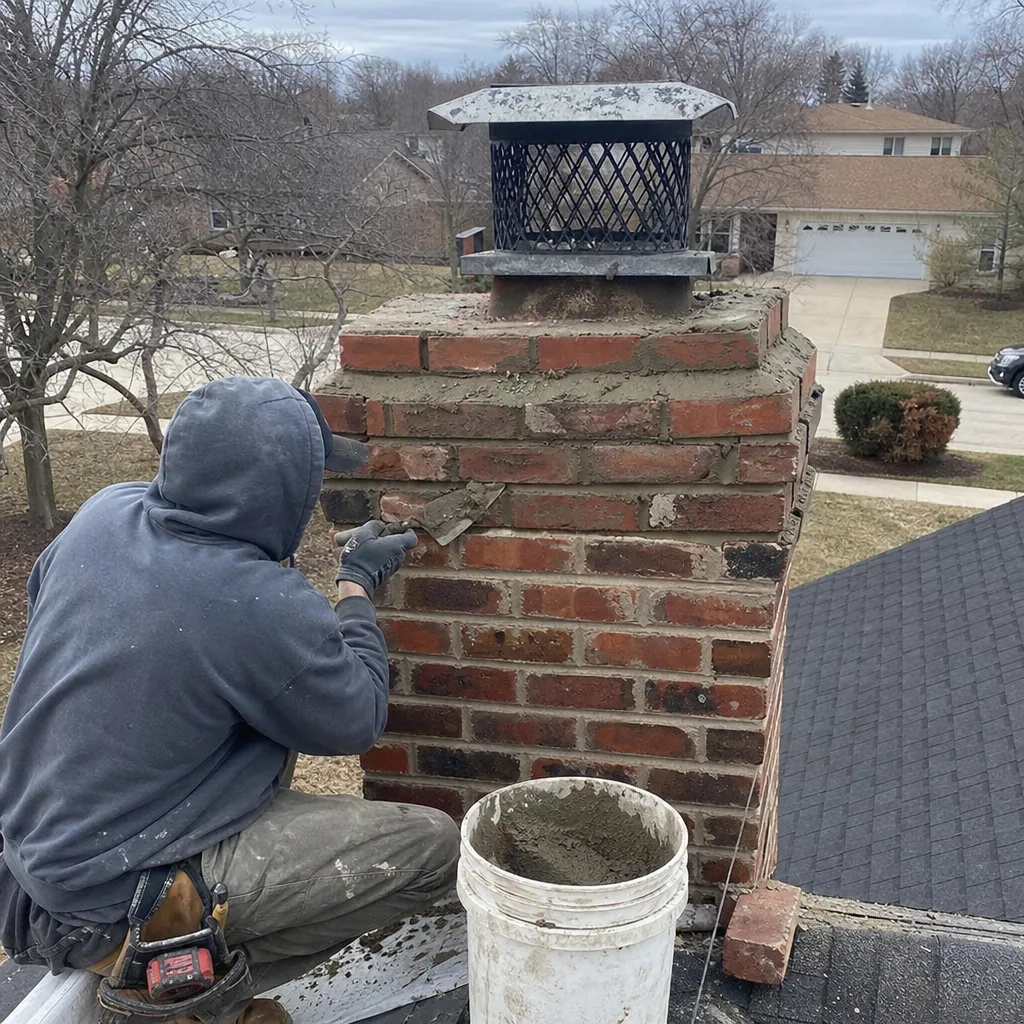
- Neglecting the chimney cap. Orland Park homeowners sometimes remove caps that clog with debris and don’t replace them, or install decorative caps with inadequate mesh. Proper cap specification prevents animal entry, debris accumulation, and water intrusion simultaneously.
When to Call a Professional
Call for immediate inspection if you smell combustion gases in living spaces, see smoke exiting the firebox into the room, or cannot fully open the damper. These are stop-use conditions. Call within two weeks for summer creosote odors, sluggish draft that persists after checking wood moisture and damper position, or visible spalling and mortar deterioration on the exterior. Schedule at your next annual sweep for minor efflorescence, slight mortar dusting, or small animal sounds that resolve when the animal departs.
Emberly Chimney Cleaners Orland Park offers free estimates in Orland Park - call (708) 294-2571. Every estimate includes a written price, written scope, and written warranty before any work begins, under Haven Standard Clause 1. Our camera-scan inspection and documented photo record are included as standard under Clause 4, not sold as an upgrade. If you have a competitor’s written estimate, we provide a Free Second Opinion with no obligation.
Frequently Asked Questions
A standard Level 2 chimney sweep with camera inspection in Orland Park typically ranges from $250 to $400, depending on flue accessibility, number of appliances served, and whether mechanical de-glazing is required for Class III creosote. We deliver a written price before any work starts, with no add-ons after arrival. Call (708) 294-2571 for an exact quote - estimates are free.
You need a new liner only when camera inspection confirms damage that compromises containment of combustion gases or structural integrity. Clay tile with hairline cracks can often continue in service with more frequent monitoring. Disconnected, collapsed, or severely spalled tile requires replacement. Stainless steel liner inserts, properly sized and installed, carry a lifetime warranty in many applications. We never recommend liner replacement without camera evidence you can see for yourself, and we clearly distinguish conditions that require immediate action from those that can be monitored. Bring us any competitor’s written liner recommendation for a Free Second Opinion.
The National Fire Protection Association recommends annual inspection for all chimneys, with cleaning as needed based on deposit accumulation. In Orland Park’s climate, wood-burning fireplaces used as primary heat sources typically require annual sweeping. Occasional use fireplaces may extend to every two years if inspection shows minimal accumulation. Gas appliance flues need less frequent cleaning but still require annual inspection for condensation damage, debris, and liner deterioration. We document deposit depth and liner condition with photos each visit so you can make informed decisions about timing.
Skipped maintenance allows creosote accumulation to progress from brushable Class I and II deposits to glazed Class III that requires mechanical removal at higher cost. Water intrusion through deteriorated crowns and flashing progresses to liner damage, then to structural masonry damage requiring rebuild rather than repair. Most critically, liner damage that begins as minor cracking progresses to breach, permitting combustion gases including carbon monoxide to enter wall cavities and living spaces. The cost progression is roughly: annual sweep ($250-$400), mechanical de-glazing ($400-$700), liner replacement ($2,500-$6,500), partial rebuild ($4,000-$12,000), full rebuild ($15,000+). Camera inspection catches problems at the sweep or de-glazing stage.
Humid summer air activates volatile compounds in creosote deposits that remain inert in dry winter conditions. Negative pressure from air conditioning draws these odors into your home. The smell indicates glazed creosote is present and your flue operated below optimal temperature during the previous burning season. It’s not an immediate emergency but does mean your chimney needs mechanical de-glazing and your home’s pressure balance needs evaluation before the next heating season.
Partially. Perform the cold flue tissue test described in this guide: with damper open, hold thin tissue at the flue throat and observe air movement. Steady inward draw suggests the flue is at least partially open. Weak or absent draw suggests blockage or severe pressure imbalance. However, this test cannot distinguish partial blockage from complete blockage above the test point, cannot identify the nature of a blockage, and cannot assess liner condition. Only a camera scan provides definitive information. Do not climb your roof to check visually - falls from roof height are a leading cause of serious injury in home maintenance.
Level 1 inspection is visual examination of readily accessible portions of the chimney exterior, interior, and appliance connection, with no tools or climbing. Level 2 adds camera scan of the flue interior, inspection of accessible portions of the chimney in attics and crawl spaces, and evaluation of clearance to combustibles. Level 2 is required upon sale or transfer of property, after chimney fire or seismic event, and when any change is made to the appliance or fuel type. At Emberly Chimney Cleaners Orland Park, we perform Level 2 as our standard on every visit because the conditions that create hazard are invisible without the camera.
The Bottom Line
Chimney warning signs are not mysterious. White smoke from structure, not flame, means liner breach. Gray smoke means incomplete combustion, solvable by fuel and practice changes. Summer creosote odor means glazed deposits and pressure imbalance, not emergency but requiring scheduled service. Spalling brick predicts liner damage with a 12-18 month lead time. The camera scan, not the flashlight, reveals which category your symptom belongs to and what specific failure it indicates. Document what you observe, note timing and conditions, and schedule inspection proportionate to urgency. In Orland Park’s climate, annual Level 2 inspection with camera documentation is the minimum that matches actual conditions to appropriate response.
Written by Corrine Halstead, Owner at Emberly Chimney Cleaners Orland Park, serving Orland Park since 2009.